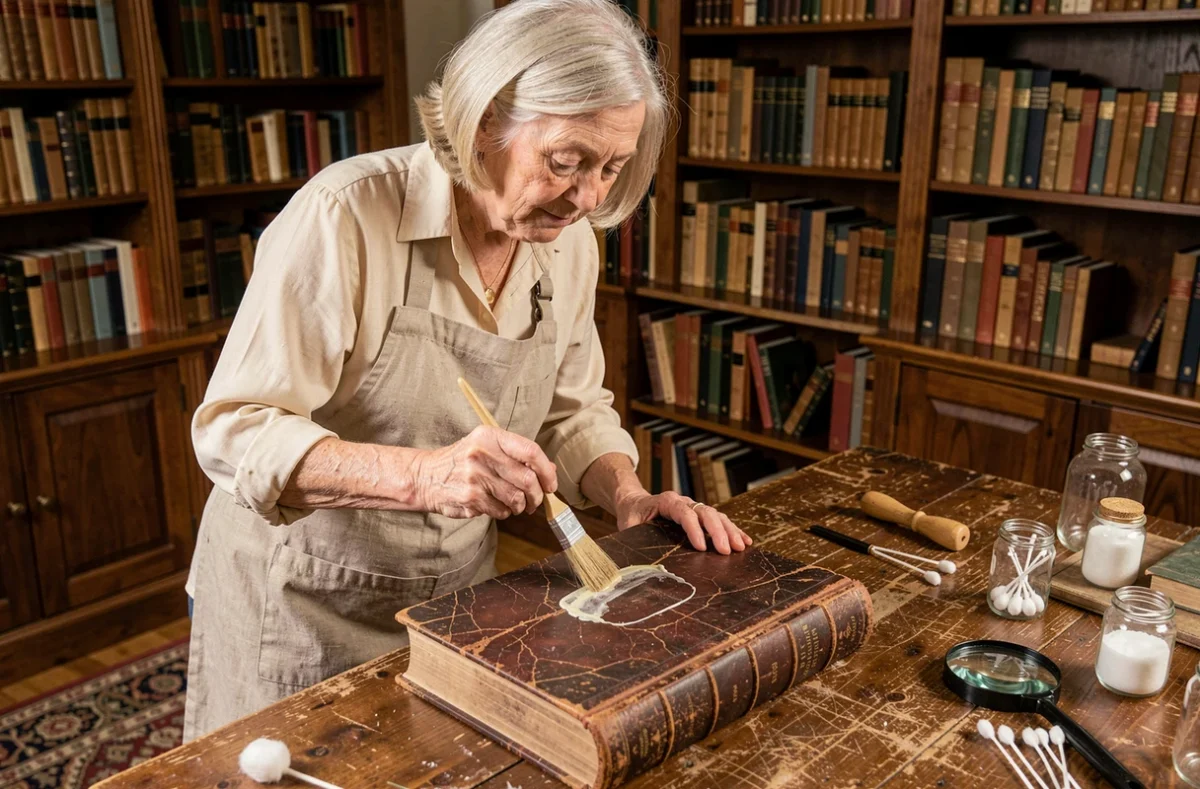
The edge of an old book is the most exposed part on a shelf and often the first to show signs of degradation. Embedded dust, tarnished gilding, fibers torn by a clumsy gesture: the damage in this area is rarely reversible. Protecting and maintaining the edge of your old books requires precise actions tailored to the materials present.
1. Dust with a soft brush, book closed and held
The first reflex for maintaining the edge of an old book is regular dusting. Use a very soft bristle brush (like a wide makeup brush or a bookbinder’s brush) and keep the book firmly closed during the operation.
Wiping a cloth directly on the edges can tear fibers, move dirt into the paper, and weaken the surfaces. The brush movement should go from the spine towards the gutter, without excessive pressure. For works presenting tips for maintaining the edge of a book, this step is the foundation of all preventive conservation.
2. Identify the decorative technique before any intervention
Not all edges are created equal. A gilded edge, a painted edge, or a embossed edge do not tolerate the same actions as a raw edge that is simply marbled.
Prior identification of the decorative technique is crucial. A damp cleaning, even light, can alter the gilding, dissolve certain primers, or cause irreversible halos. If in doubt about the nature of the finish, it is better to stick to a dry brush and consult a restorer.
3. Avoid erasers on gilded or painted edges
An eraser (like a kneaded eraser) is sometimes recommended for cleaning yellowed paper. On a decorated edge, this poses a real risk. Abrasion, even gentle, can detach particles of gilding or scratch a fragile primer.
Reserve the use of the eraser for raw, undecorated edges, and only with minimal pressure. Never erase Japanese paper or a painted edge.
4. Stabilize the environment rather than correcting sporadically
Rapid fluctuations in temperature and humidity cause paper, leather, and covering materials to swell and then contract. These repeated cycles exacerbate edge deformations and create tensions in the joints.
The stability of the environment is more important than an isolated ideal humidity value. Instead of seeking a precise rate, aim for consistency: avoid rooms crossed by drafts, south-facing walls, and immediate proximity to a radiator.
5. Support books vertically without compressing them
A book that is too tightly packed on the shelf experiences constant pressure on its edge and joints. A book that is too loose deforms under its own weight and eventually sags.
- Support the books upright with bookends suitable for their height, without forcing.
- Leave a slight gap to be able to remove a volume without pulling on the headcap (the top of the spine).
- Store very large formats flat to prevent the weight of the pages from tearing the seams.
Never pull a book by the top of the spine: grasp it by pushing its neighbors and taking it by the covers.
6. Protect paperbacks with crystal paper
Paperbacks, whose soft cover is directly exposed, benefit from protection with crystal paper. This material absorbs some of the light rays that yellow the covers and protects the edge from friction between volumes.
Crystal paper is chemically neutral and does not adhere to the support, distinguishing it from plastic film or adhesive tape. Never use scotch tape or cling film: these materials trap moisture and leave acidic residues over time.
7. Nourish the leather of bindings with suitable wax
The leather of a binding that dries out eventually cracks, which directly weakens the spine and edge of the book. Nourishing the leather once or twice a year helps maintain its flexibility.
Wax 213, used and marketed by the National Library of France, is a colorless wax suitable for old bindings. Apply it with a soft cloth, in light passes, without touching the gilding. Shoe polishes should be avoided: they provide temporary shine but dry out old leathers.
8. Keep books away from direct light
Direct sunlight discolors bindings, yellows paper, and accelerates the degradation of glues. Edges exposed in a display case or near a window are the first affected.
Prefer north-facing walls for your shelves. If you have a glass-fronted bookcase, a glass that filters ultraviolet light offers additional protection. A few months of direct exposure is enough to irreversibly discolor a tinted edge.
9. Monitor book-eating insects
Some insects feed on leather, glue, or paper. They can pierce a book from end to end, including the edge. Woodboring beetles, silverfish, and booklice are among the most common.
- Regularly inspect the back of shelves and the spaces between volumes.
- In case of infestation, isolate the affected book in an airtight bag and place it in the freezer for several days: the cold kills the larvae.
- A dehumidifier reduces conditions favorable to insects and mold.
10. Know when not to intervene yourself
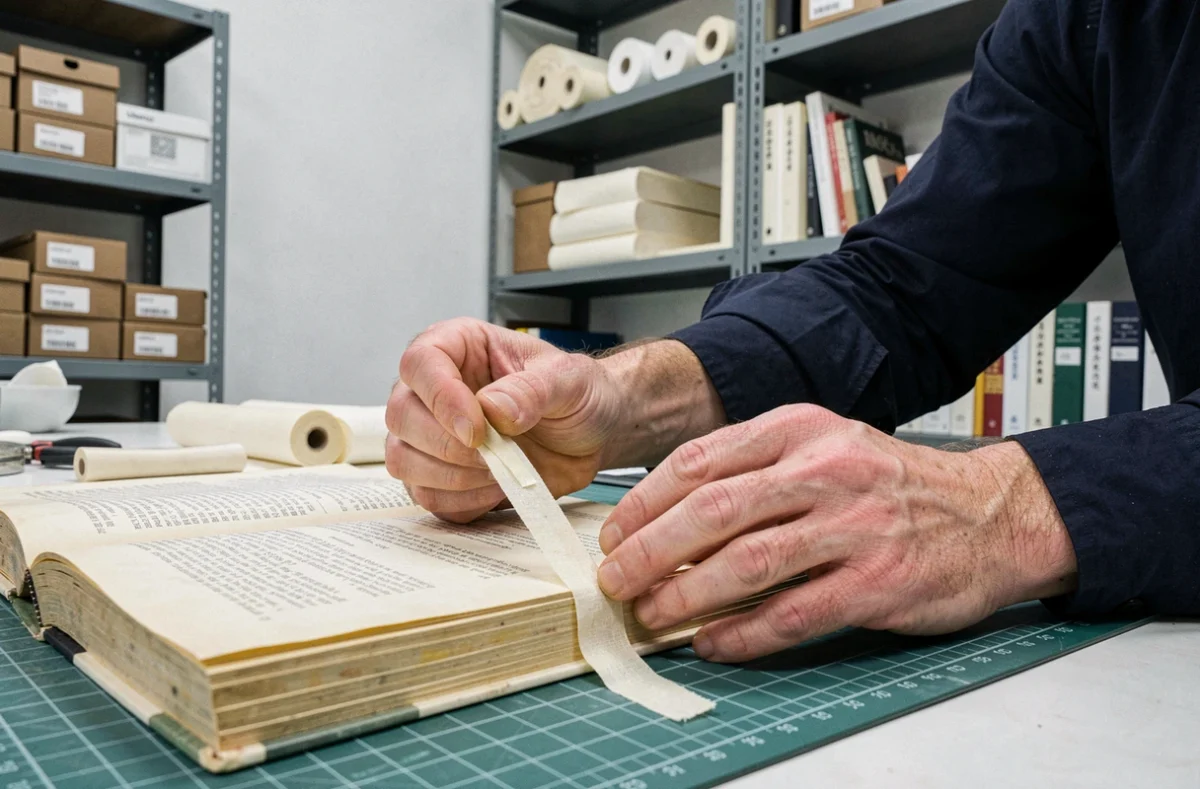
Any amateur intervention on an old book carries a risk of devaluation. Re-gluing with an inappropriate glue, applying tape to a tear, or overly aggressive cleaning can cause more damage than they claim to repair.
If the edge shows separations, active mold, or flaking gilding, the intervention of a professional restorer trained in heritage conservation is preferable. Field reports vary on the effectiveness of home remedies (baking soda, white vinegar), and professionals advise against their use on valuable works.
Protecting the edge of your old books relies less on miracle products than on the consistency of simple actions and the ability to refrain from acting when the risk outweighs the benefit. A stable environment, methodical dusting, and respect for original materials provide the best guarantee of long-term preservation.