A three-year-old who asks for the same wolf story every night for two weeks, another six-year-old who invents a sequel to the tale heard in the morning: these two situations show that children’s stories do not work the same way depending on the moment, the format, and how they are presented. Adapting the narrative to the family’s daily life is where the awakening of imagination takes place.
Interactive reading with children: asking questions changes everything
Reading a book aloud is a starting point. Transforming that reading into an exchange is something else. We are talking about interactive reading, where the adult asks questions about the characters’ emotions, encourages the child to guess what happens next, or to rephrase what they understood.
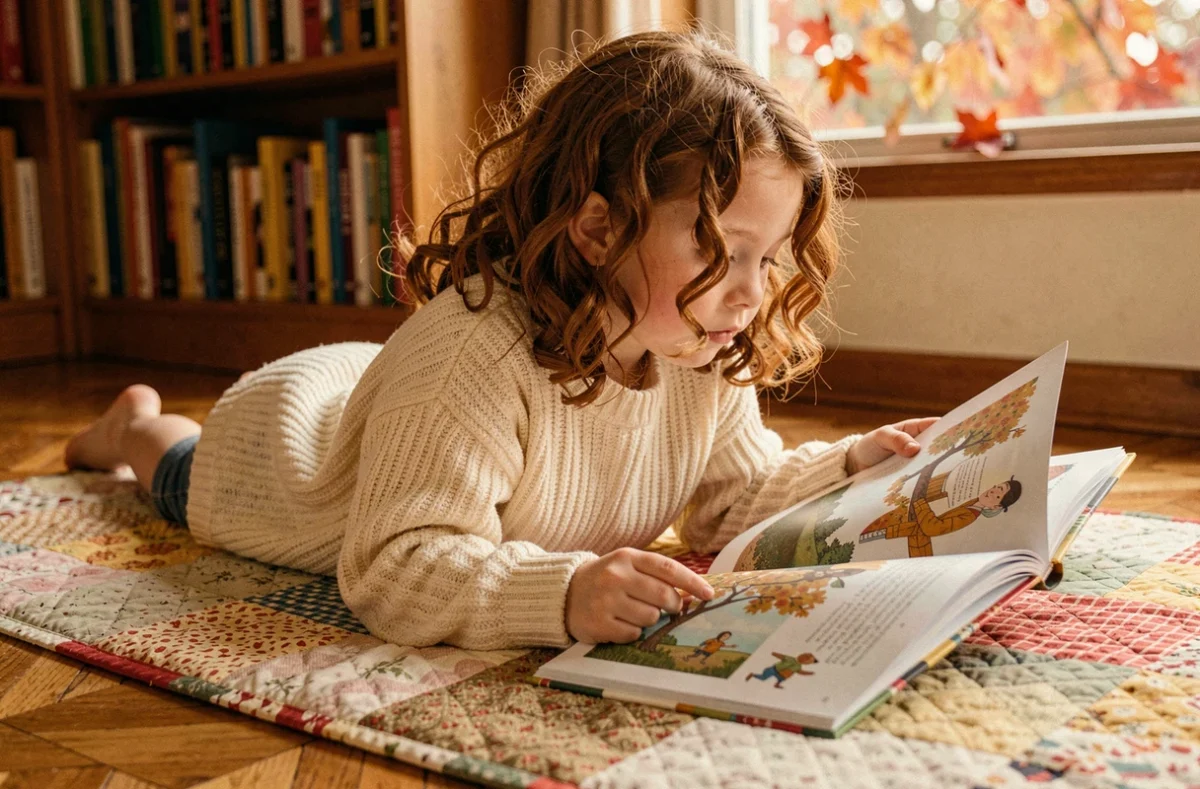
This type of interactive reading seems to enhance emotional verbalization and narrative comprehension much more than passive listening. Specifically, instead of turning pages without pause, we stop on an illustration and ask: “Why does the fox look sad here?” or “What would you do in the character’s place?”
Responses vary among children: some love to comment on every page, while others prefer to listen in silence and then recount it in their own way afterward. Both approaches have their value. The idea is to transform reading into a conversation rather than a monologue. There are indeed stories designed for this type of exchange on the Histoire D’Enfant website, with stories structured by age group.
What matters is consistency. A few minutes each day, with real verbal back-and-forth, weigh more than a long weekly session where the child loses interest after ten minutes.
Audio stories for children: when listening replaces the screen
Audio tales have multiplied in recent years, driven by children’s podcasts and connected speakers. For many families, it’s a concrete alternative to screens, especially during car rides or quiet afternoon time.
The interest in an audio story depends a lot on the listening context. An audio narrative passively listened to on repeat offers less than a story extended by an activity. Drawing a scene heard, reenacting the story with figurines, or simply rephrasing the tale in one’s own words: these extensions transform listening into imaginative material.
Creating an audio ritual without screens
The inter-ministerial report “Children and screens: in search of lost time,” submitted in April 2024, recommends avoiding screens before bedtime and maintaining a calming ritual that includes a few minutes of regular reading. Audio fits well into this logic, provided the child is not left alone facing a continuous stream.
One can structure the moment around a single tale each night, followed by a quick exchange. Choosing short stories with recurring characters helps younger children orient themselves. Classic tales featuring animals, forests, and simple quests work particularly well in audio format because their narrative structure is predictable and reassuring.
- Limit listening to one or two stories per session to maintain attention and avoid saturation.
- Offer a concrete extension after listening: drawing, role-playing with stuffed animals, or free storytelling by the child.
- Favor narratives whose duration matches the child’s actual attention span, which is often shorter than one might think.
Inventing stories as a family: oral storytelling as a daily tool
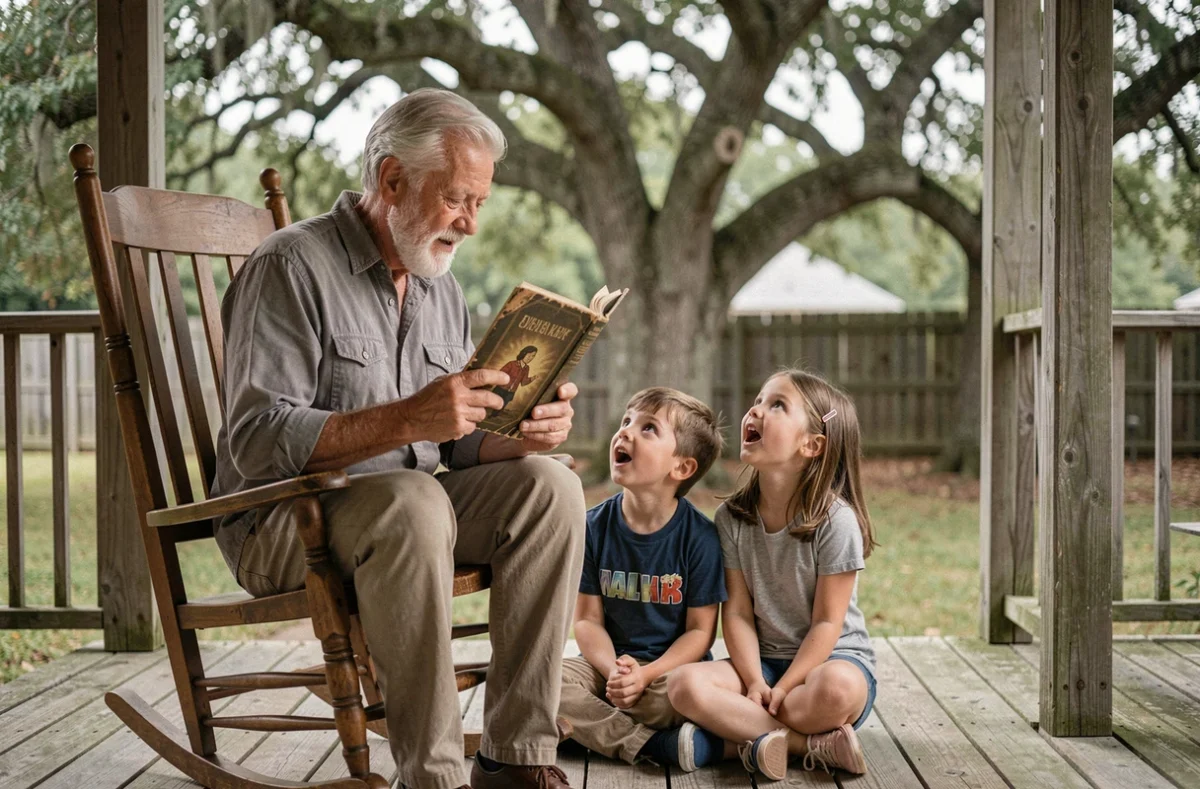
We don’t always have a book on hand. And sometimes, the most captivating story is the one we improvise in the kitchen while preparing dinner. The oral narrative invented in the moment anchors the child’s imagination in reality because they can integrate their own references: their stuffed animal, their school, the neighbor’s cat.
To get started, there’s no need for an elaborate script. We begin with a character (an animal, a child, an object that comes to life), give them a simple problem, and let the child propose solutions. This narrative structure works from around three years old.
Some concrete prompts to improvise a tale
Starting with “Once upon a time, there was a little hedgehog who had lost its way in the forest” is enough to get the ball rolling. The child completes, corrects, and redirects. We build the imaginary world together, in real-time.
Animal characters remain a powerful lever in children’s literature and oral storytelling. A shy bear, a cunning fox, a curious rabbit: these archetypes allow the child to project their own emotions without feeling directly involved. It’s a gateway to managing fears, anger, or frustration.
- Start from an element of the child’s daily life to anchor the story: a lost object, a quarrel with a friend, a storm.
- Let the child choose the ending of the story, even if it seems absurd: imagination does not follow adult logic.
- Vary the settings: the forest, a distant country, the bottom of the ocean, the attic of the house.
Adapting the format of stories to each moment of the day
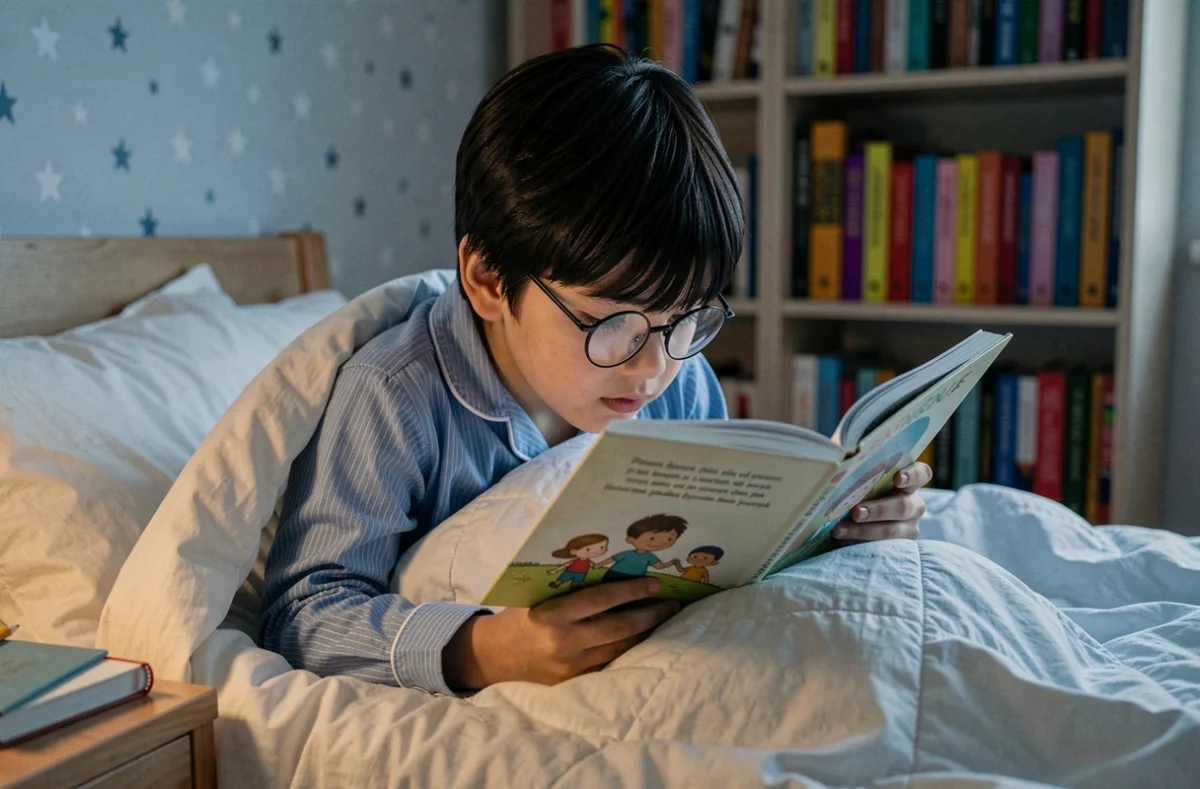
In the morning before school, we don’t have the same time or availability as at bedtime. Choosing the right format at the right moment avoids frustration and makes the ritual sustainable over time.
Upon waking or at breakfast, a narrative riddle or a two-minute micro-story is sufficient. In the car, a children’s podcast takes over. In the evening, we can afford a longer story, read or invented, in a calm environment.
This division is not rigid. Some children prefer their main story in the morning, while others only engage in the evening. The challenge is to create a regular habit rather than a perfect moment. A child who hears stories every day, even brief ones, develops a relationship with narrative, books, and imagination that builds gradually.
The government guide for children aged 3 to 6 emphasizes this point: maintaining a few minutes of regular reading in the daily routine matters more than the duration of each session. Consistency is more important than performance.