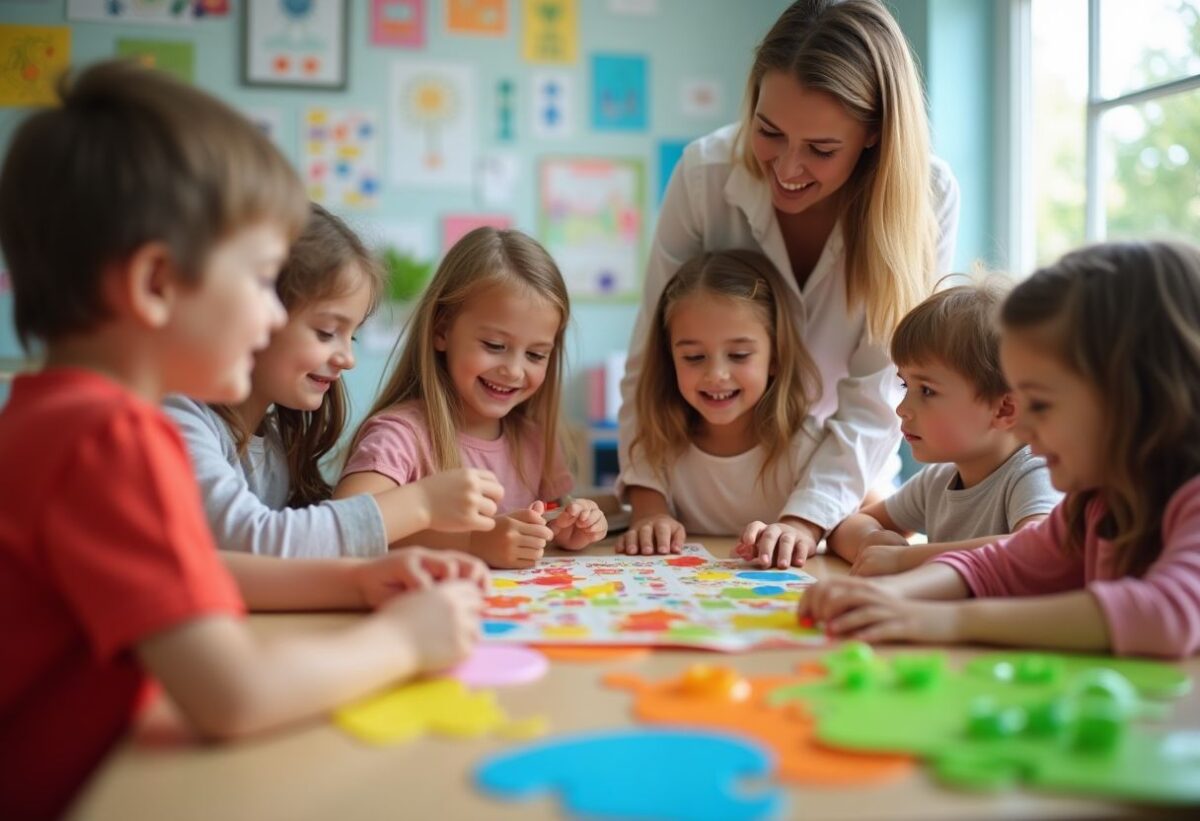
The early years of formal education are often considered essential for establishing a solid foundation for future learning. During this pivotal period, teachers are constantly seeking innovative pedagogical methods to capture the attention of young students and stimulate their natural curiosity. Playful activities, including educational games, creative activities, and various forms of interactive learning, have taken a prominent place in classrooms. These activities, far from being mere distractions, are often integrated into the educational curriculum to support and enrich learning. In light of the evolution of pedagogical methods, one question arises: are playful activities truly recommended by teachers for first-grade students?
The benefits of playful activities on learning in first grade
When a child has fun while learning, they seem to enter a state of optimal concentration and engagement. Playful activities appear to be an ideal method for capturing the attention of young learners and enhancing their understanding of fundamental concepts.
- Increased motivation: games stimulate interest and curiosity, encouraging students to invest more in their tasks.
- Learning by doing: children directly experiment with concepts, which facilitates their understanding and retention.
- Social development: by participating in group games, students develop essential social skills such as cooperation and respect for rules.
- Reduction of anxiety: a playful approach decreases the pressure of failure, creating a more relaxed and positive learning environment.
How teachers integrate games into the curriculum
The integration of playful activities into the school curriculum is not done randomly. Teachers, drawing on their experience and pedagogical knowledge, have developed precise strategies to maximize the impact of these activities on learning.
Some teachers start the day with thinking games to stimulate students’ intellect right from the morning. Others prefer to end the day with artistic and creative activities, allowing children to express themselves and relax. It is not uncommon to see math lessons transformed into interactive adventures, where students solve puzzles to progress in the game. These methods not only promote a better understanding of the subjects covered but also encourage autonomy and a willingness to learn.
Teachers’ feedback on the impact of playful activities
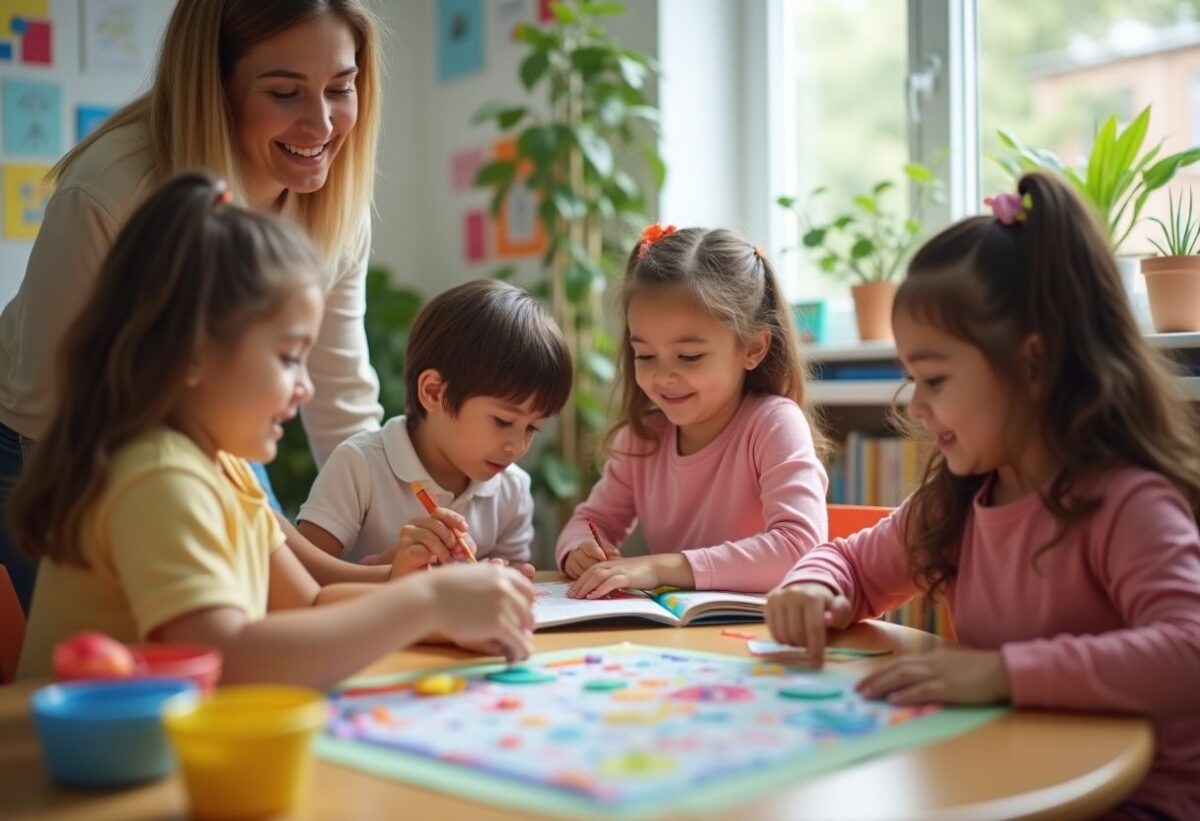
To assess the effectiveness of playful activities, there is nothing better than turning to those who implement them daily: the teachers themselves. Their testimonies reveal often very positive results.
Given the enthusiastic feedback from children, teachers notice a significant improvement in cognitive and social skills. Students, through the first-grade homework and games, seem to develop a self-confidence that carries over into other academic areas. One teacher even mentioned that games helped their students overcome certain fears related to mathematics by transforming abstract concepts into concrete and fun tasks.
Limitations and precautions to consider
While playful activities offer many advantages, it is also important to be aware of the limitations and precautions to take to avoid potential pitfalls.
- Avoid overstimulation: too many games can lead to excessive excitement, hindering the child’s ability to concentrate.
- Ensure educational content: games must be carefully selected to ensure they provide real pedagogical value.
- Vary approaches: a diversification of activity types is necessary to meet the different needs and learning styles of students.
- Supervise interactions: group games should be monitored to ensure that every child participates actively and that the rules are respected.
The integration of playful activities into first-grade teaching seems to be a promising approach to energize learning and promote the overall development of students. By stimulating interest and enhancing children’s understanding, these methods contribute to creating a constructive and enjoyable learning environment. However, to ensure their effectiveness, thoughtful and balanced implementation is essential.