
A poorly fitted screwdriver increases the risk of damaging a screw, even for the simplest tasks. Some materials react differently depending on the season, making the same action effective in summer but imprecise in winter.
The precision of an action does not always guarantee the strength of an assembly. Sometimes, the order of steps matters more than the quality of the tools. Experience is rarely gained without mistakes, but a few principles can help avoid the most common ones.
Why DIY at home is becoming increasingly popular
Home DIY is gaining ground in households, driven by a desire for freedom and a context where the cost of renovations pushes people to reinvent their interior improvements. DIY projects not only bring hands together around a workbench: they become a way to take control of one’s spaces, test tips, and shape a place in one’s image. Whether it’s repainting a room, creating a custom piece of furniture, or rethinking the function of a room, each achievement reflects a desire for uniqueness, far from impersonal standards.
This autonomy is supported by a wealth of guides, forums, videos, and exchanges where everyone shares their own DIY projects. Materials are renewed, methods circulate, and intimidating tools become familiar thanks to accessible tutorials. Making mistakes is part of the process, and each error becomes an opportunity to progress.
Imagine transforming a simple raw wood shelf into a decorative object that reflects your personality: all it takes is patience, choosing the right accessories, and adjusting every detail. The advice and tips gathered during an exchange or by deciding to visit the Bricotage website open the door to original creations. DIY then moves away from mere repairs to become a space for experimentation, creativity, and conviviality.
What reflexes to adopt to avoid pitfalls and gain efficiency
Engaging in a DIY project always starts with rigorous organization. Before touching any tools, take the time to plan each step, anticipate constraints, and allow a margin for the unexpected. This structured approach offers real comfort in work, limits last-minute surprises, and maximizes your chances for a professional-quality result, even if you’re a beginner.
Here are some points to keep in mind to approach your work under good conditions:
- Assess your tools: each piece must be suitable and in working order. Using a reliable corded drill, a precise laser level, or a well-sharpened jigsaw can make a difference in the quality of the final work.
- Carefully choose your materials. Whether for wood, paints, or fastening elements, the selection directly influences the durability and finish of your renovations.
- Rely on clear tutorials and detailed demonstrations to learn the right techniques and avoid common pitfalls.
To save time and energy, carefully organize your workspace and centralize your supplies. Avoid unnecessary trips back and forth. Stay attentive to safety: gloves, goggles, following instructions… every detail counts, from marking to the final touch-up. By adopting these tips, you maximize your chances of progressing smoothly and achieving solid results that meet your expectations.
Simple project ideas to get started without stress
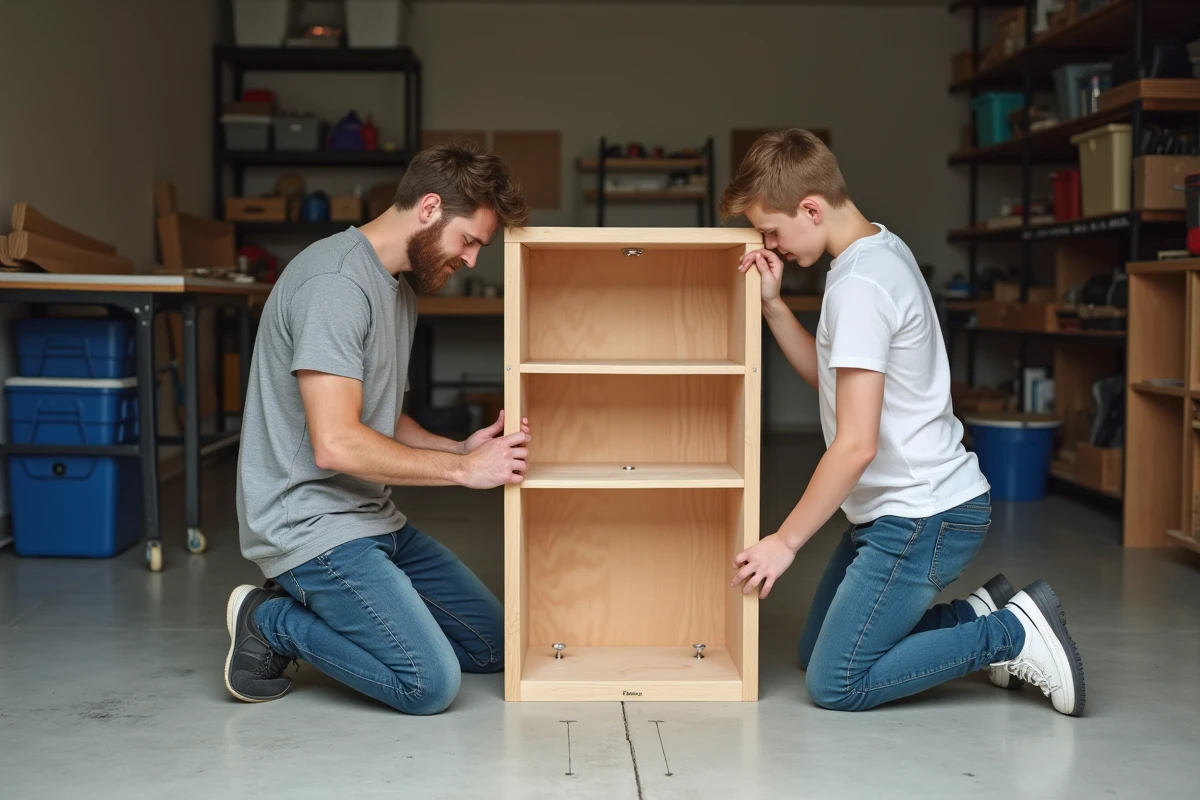
Diving into home DIY doesn’t require sophisticated equipment or advanced training. Focusing on accessible DIY projects ensures familiarity with tools and builds confidence. Take the example of a wall shelf made of wood: a few boards, a drill, a level, and there you have a personalized storage space coming to life. It’s rewarding, motivating, and encourages further pursuits.
Painting is also a perfect entry point. Changing the color of a wall, updating a piece of furniture, or playing with contrasts transforms a room without breaking the bank. To succeed, preparation is key: cleaning, protection, reliable materials. With a good roller and a suitable brush, the transformation takes shape, stress-free.
For those looking for concrete ideas, here are several quick and accessible projects:
- Set up a pegboard to organize tools in the garage.
- Assemble an entryway bench from reclaimed wood, combining utility and aesthetics.
- Install original hooks by repurposing simple materials.
These DIY projects naturally fit into the routine and allow for gradual progress. Taking the time to carefully identify the steps, perfect the finishes, and adapt the method to each situation: these are all reflexes to develop your skills and deepen your connection with materials in your own home.
When the last brushstroke dries or the final screw is in place, there remains the satisfaction of having shaped a space in your image. The next idea often doesn’t wait long to make itself known.