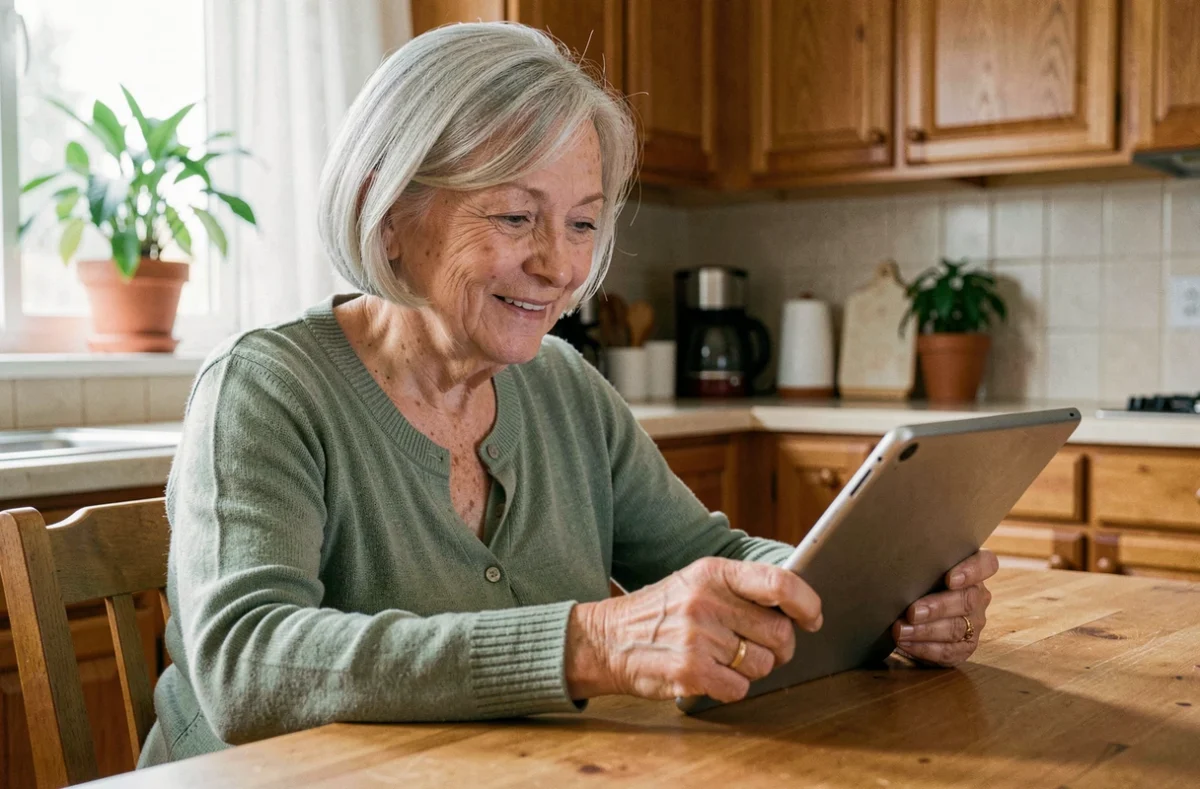
Digital services refer to all the tools accessible via the Internet or an application that allow tasks to be completed without physical movement: making a medical appointment, paying a bill, communicating with a loved one via video conference. For seniors, these services do not replace human contact, but they reduce dependence on opening hours, queues, and sometimes arduous travel.
Medical Telemonitoring and Connected Health: What Digital Really Changes
Medical telemonitoring is often confused with an emergency service. In reality, alerts generated by a connected device (blood pressure monitor, glucometer, oximeter) are reviewed by an operator according to defined days and times, and not continuously. The device falls under a strict medical framework: it requires a prescription and a device registered for reimbursement.
This distinction has practical consequences. A senior equipped with a connected blood glucose sensor does not benefit from immediate intervention in the event of a spike. Remote monitoring complements traditional consultations; it does not replace them. Caregivers need to be aware of this so they do not let their guard down once the device is installed.
Among the services offered by Senior Web, several platforms direct users to digital health solutions tailored to each profile, clearly distinguishing medical monitoring from emergency teleassistance.
Online appointment booking with a general practitioner or specialist remains the most common use. A time slot can be reserved in just a few clicks, with an automatic SMS reminder. For a person with reduced mobility, avoiding a phone call in a crowded waiting room represents a significant gain in autonomy.
Online Administrative Procedures: Simplified Access, but Not Without a Safety Net
Tax declaration, housing allowance application, identity card renewal: the dematerialization of public services has become widespread. For seniors comfortable with a web browser, the time savings are real. However, recent data from Insee shows that difficulties are not limited to those who never connect.
Using the Internet and mastering an online process are two distinct skills. Filling out a tax form online requires understanding an interface, attaching a digitized document, and validating a multi-step process. A senior who checks their emails every day may find themselves stuck when faced with an administrative tele-service.
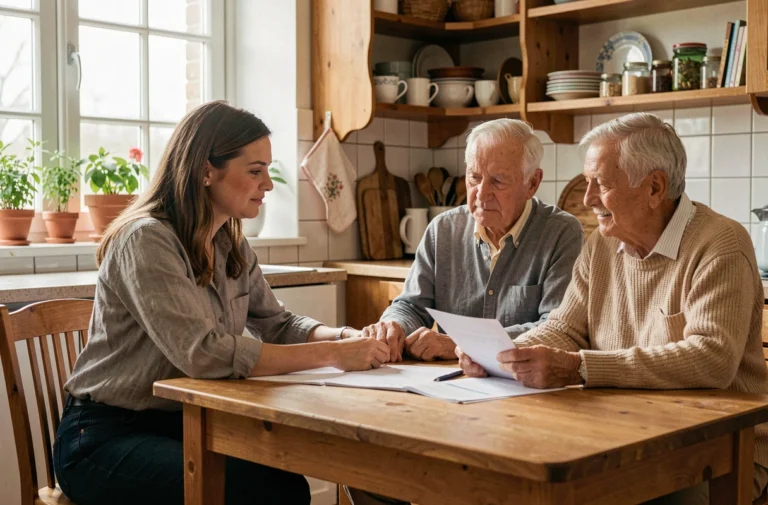
The Digital Barometer 2025 confirms this reality: when an online process gets stuck, users prefer to contact an agent, either by phone or in person, rather than follow a tutorial. The most effective digital services for seniors therefore integrate a fallback human solution, a number to call, or an accessible physical counter.
Criteria for an Administrative Service Adapted to Seniors
- A readable interface with large buttons, high contrast, and adjustable font size without complex manipulation
- A visible phone number on every page, connected to an advisor capable of resuming the process where it was interrupted
- An automatic backup system for the form, to avoid having to start over after an accidental disconnection
- A confirmation sent by email and by postal mail, so that the user has a tangible record
Communication and Social Connection: Overcoming Isolation Through Digital Tools
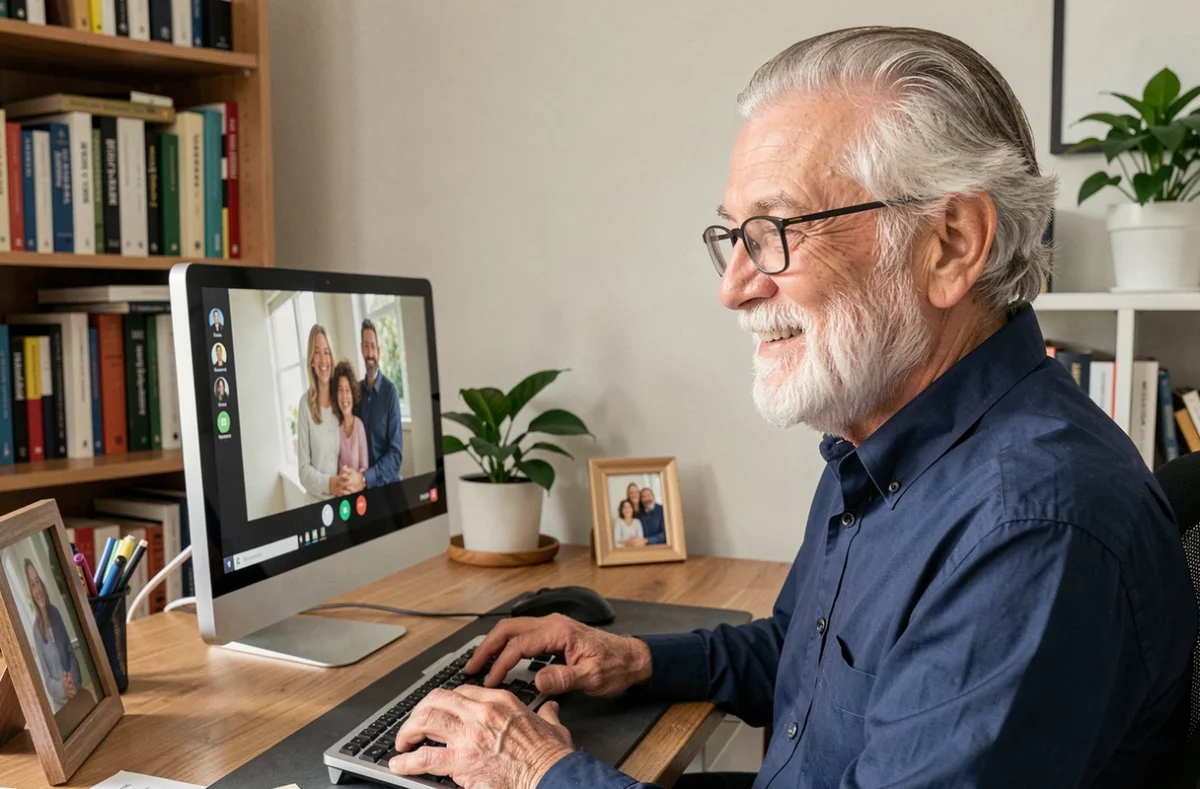
Video conferencing has transformed how seniors maintain contact with their families. A weekly video call with grandchildren living hundreds of kilometers away does not replace a visit, but it maintains a regular emotional connection that a phone call alone does not always allow.
Instant messaging (rich SMS, group chat applications) offers another advantage: asynchronous communication. A senior can send a photo of their garden in the morning, receive a response in the evening, without the constraint of shared timing. This flexible pace suits those who are tired at the end of the day or have a busy medical schedule.
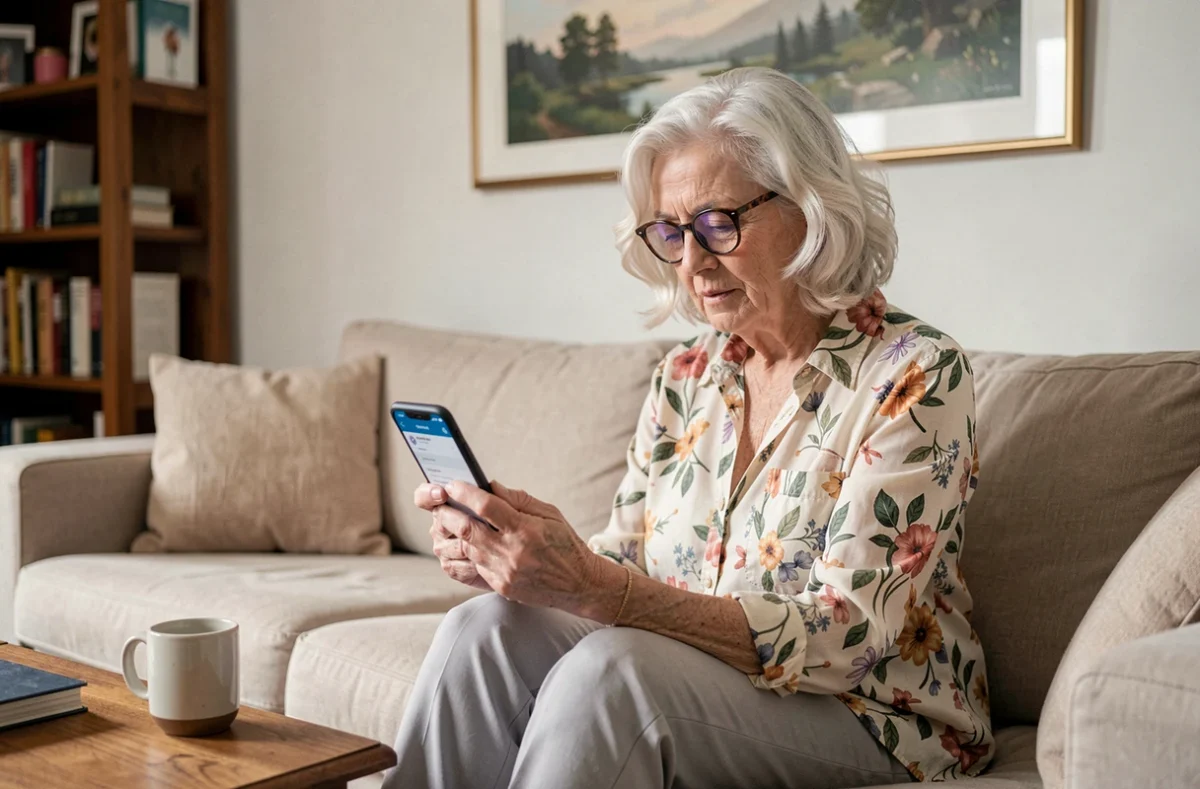
Social Networks and Thematic Forums
Some seniors join online groups around a passion (gardening, genealogy, cooking). These spaces create a sense of belonging to a community that partially compensates for geographical isolation. Participating in a discussion forum about tomato cultivation or restoring antique furniture generates regular exchanges, sometimes daily.
The main risk remains exposure to scams and fake profiles. A senior active on social networks must learn to identify fraudulent messages, which brings us back to the issue of basic digital skills.
Personal Data Security: A Often Overlooked Prerequisite
The proliferation of online accounts (health, banking, taxes, messaging) generates as many passwords to remember. Many seniors use the same password everywhere or write it down on a piece of paper stuck to the screen. The security of personal data conditions the reliability of all other digital services.
Three actions significantly reduce risks:
- Using a password manager, even a basic one, that stores credentials in an encrypted manner and prevents reuse
- Activating two-factor authentication on sensitive accounts (bank, health insurance), which adds an SMS verification in addition to the password
- Never clicking on a link received by email asking to “confirm” banking or health information, regardless of how the message appears
These practices are not intuitive. They require support, often from a relative or a collective workshop in a media library. The digital divide is not only measured by the ability to connect but also by the ability to protect oneself once connected.
Digital technology facilitates the daily lives of seniors, provided that each service incorporates a human support dimension. A poorly designed tool or one lacking a phone support option creates more frustration than it resolves. The quality of a digital service for seniors is judged less by its features than by its ability to remain accessible when something goes wrong.