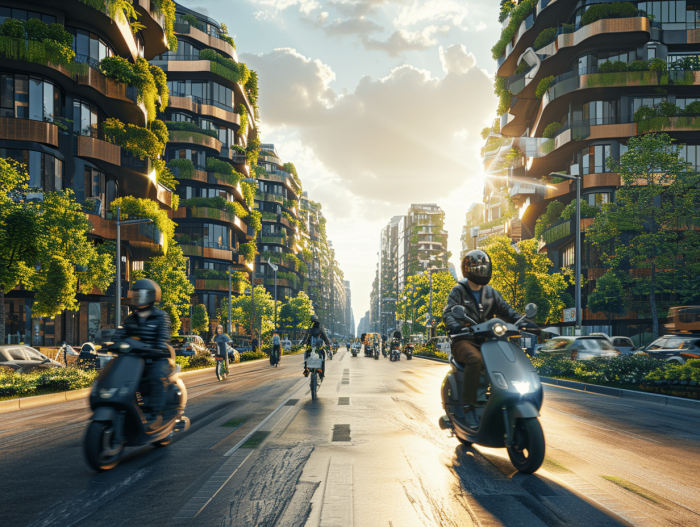
Cities are evolving rapidly, and transportation needs are following this dynamic. To meet these new requirements, urban mobility is transforming and adopting innovative solutions. Eco-friendly alternatives like electric bikes and shared scooters are multiplying, offering more flexible and environmentally friendly transportation options.
At the same time, public transport is modernizing with the introduction of electric buses and autonomous metros. Mobile applications facilitate trip planning, making travel smoother. This reinvention of urban mobility aims to create more sustainable and pleasant living spaces for everyone.
Technological Innovations in Urban Mobility
Technological advancements are revolutionizing urban mobility. The Internet of Things (IoT) allows fleet managers to optimize routes, while autonomous vehicles (AV) enhance road safety. Artificial intelligence (AI), in turn, makes these autonomous vehicles feasible, integrating sophisticated navigation systems and advanced sensors.
- 3D Printing: reduces greenhouse gas emissions during the manufacturing of automotive parts.
- Augmented Reality (AR): improves driver immersion and safety.
- Smart Infrastructure: optimizes delivery routes in urban areas.
Combined services merge different modes of transport, thus facilitating the transition between mobility options. Big data optimizes operations for fleet managers, providing better forecasts of transport needs and reducing costs.
Academic and industrial initiatives play a key role. The École Polytechnique Fédérale de Lausanne (EPFL) embodies scientific excellence and innovation. The CircuBAT project automates battery dismantling, a major advancement for the sustainability of electric vehicles (EV). Platforms like IntraParis nomade centralize information on different modes of transport, thus facilitating access to smoother and more integrated mobility for users.
With the emergence of these new technologies, we are witnessing a true transformation of urban landscapes, offering more efficient, safe, and eco-friendly mobility solutions.
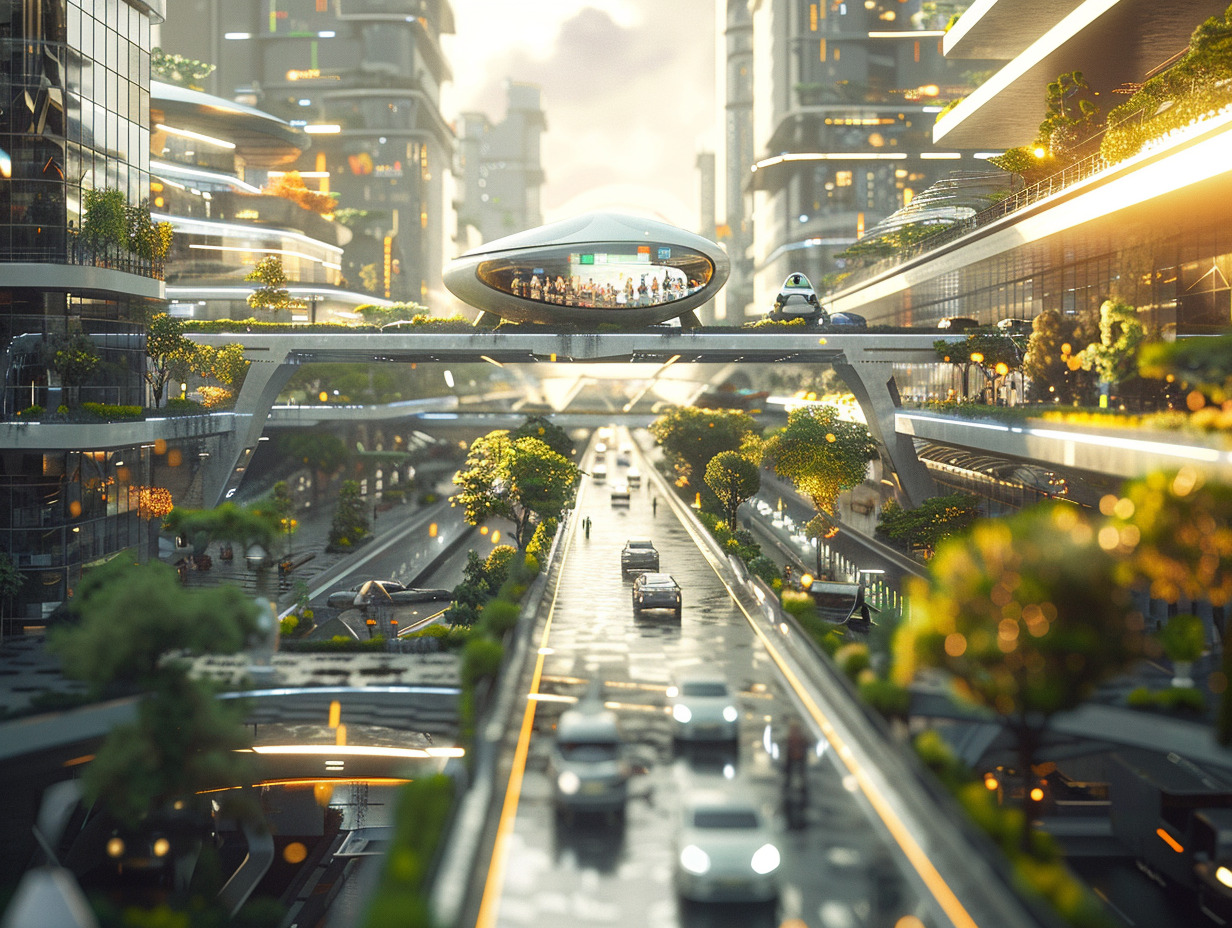
New Modes of Transport and Their Impact on Cities
Micromobility is positioning itself as an economical alternative for urban mobility. Electric scooters, bike-sharing, and other small vehicles are proliferating in the streets of major metropolitan areas. These means of transport respond to the growing demand for fast and flexible transportation solutions while reducing the carbon footprint.
Residents of Île-de-France make 43 million trips per day, making the Île-de-France region a living laboratory for new forms of mobility. The Capital receives 500,000 packages daily, highlighting the impact of e-commerce on urban logistics. The health crisis has accelerated the development of remote work, altering travel flows and necessitating a reconfiguration of transport infrastructures.
Public and Private Initiatives
Local authorities and businesses are addressing traffic issues. Several initiatives, such as the IntraParis nomade project, aim to create more integrated and sustainable mobility solutions.
Impact of the Energy Transition
The energy transition significantly impacts urban mobility. The development of electric vehicles (EV) and charging infrastructure is becoming essential to reduce greenhouse gas emissions.
The 2024 Olympic Games represent a major deadline for the Metropolis of Grand Paris, which is reviving its logistics pact to address the challenges of urban mobility and logistics. According to David Belliard, Deputy Mayor of Paris in charge of new mobility, it is necessary to redefine the priorities of public space usage to better integrate these new forms of mobility.