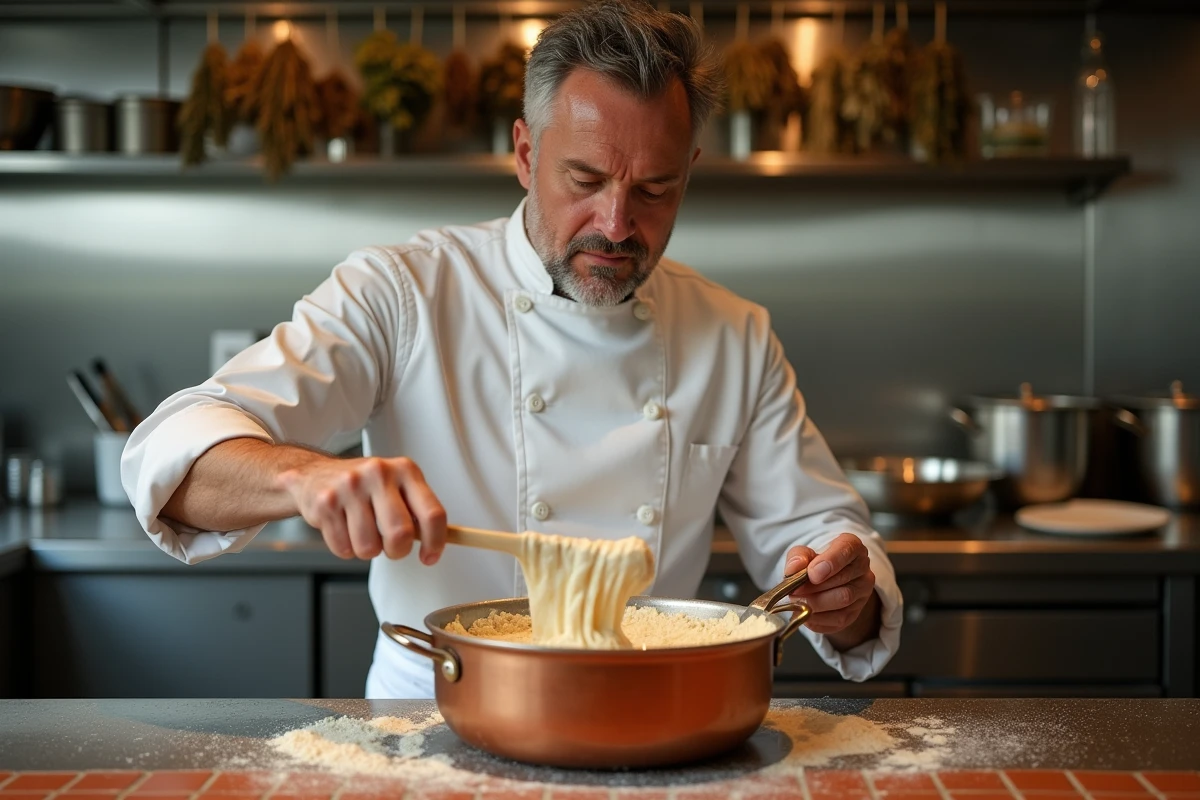
Brandade de morue refers to an emulsion made from desalted cod, olive oil, and sometimes potatoes, with a texture that relies on precise mechanical work. The word comes from the Provençal “brandar,” which means to stir. This etymology summarizes the foundational gesture of the dish: a constant agitation to bind ingredients that, without technique, remain a simple fish puree.
Emulsion and texture: what distinguishes a chef’s brandade from a plain cod puree
The difference between a successful brandade and a bland cod mash lies in a physical mechanism: the emulsion between the fish fibers and the fat. Cooked cod contains natural gelatin derived from the collagen in its flesh. This gelatin, combined with the gradual addition of olive oil, creates a stable binding comparable to that of mayonnaise.
To achieve this texture, the cod must be worked while still warm. When cold, the fibers stiffen and do not release enough gelatin. The olive oil is incorporated in a thin stream, as one would when making an emulsified sauce.
Milk (or cream) is then added to soften the mixture and prevent it from becoming too compact. The alternating addition of oil and milk is the key to a creamy brandade. Adding too much liquid at once breaks the emulsion, causing the brandade to collapse into a lumpy mash.
The approach of Michel Sarran’s brandade de morue pushes this logic of precision by treating each step as a technical gesture in its own right, not just a simple assembly of ingredients.
Desalting the cod: the variable that most recipes underestimate
Desalting conditions everything else. Poorly desalted cod makes the brandade inedible, regardless of the quality of the olive oil or the precision of the technique.
The process usually takes between one and two days, with several changes of cold water. The flesh must lose enough salt to be pleasant to the palate, but retain enough to structure the texture. Excessive desalting produces soft, bland flesh, unable to hold the emulsion.
Concrete guidelines for successful desalting
- Place the cod skin-side up in a large volume of cold water, so the salt descends by gravity
- Change the water at least three times, spacing the baths by several hours
- Taste a small piece cooked in water before starting the recipe: the salt level should be slightly below what is desired in the finished dish, as reduction will concentrate the flavors
- Prefer a thick piece with few bones, which is easier to crumble evenly
This preparatory work may not be spectacular, but it separates a bland brandade from a balanced one.
Potato or not: the debate between culinary schools
This question has long divided cooks in the south of France. The strictest Nîmes tradition rejects the potato. The “pure” brandade contains only cod, olive oil, milk, and garlic. The potato, in this view, dilutes the taste of the fish and turns the dish into a gratin.
Other traditions, particularly Portuguese and Aveyronnaise, incorporate the potato as a full-fledged component. It adds volume, softens the strength of the cod, and makes the dish more accessible.
Both approaches are legitimate, but they do not produce the same dish. With potato, the texture is denser and the taste rounder. Without potato, the marine flavor dominates, and the oil-fish emulsion is fully perceived.
For a version with potatoes, the choice of starchy varieties is crucial. They mash easily and absorb fat without creating lumps. Firm-fleshed varieties, on the other hand, resist mashing and leave chunks in the preparation.

Seasoning and final cooking: the details that make the difference
Garlic is the third aromatic pillar of the brandade, after cod and olive oil. It is used in moderation, often blanched once or twice to lose its raw sharpness. Too much garlic masks the flavor of the fish.
Possible finishes depending on the desired style
- A stint in the oven with a thin layer of golden breadcrumbs, for a contrast of textures between crisp and creamy
- A drizzle of fresh lemon juice at the time of serving, which cuts the fat and enhances the cod
- A few chopped parsley leaves or a twist of white pepper, more discreet than black on a light dish
The final cooking in the oven, when chosen, should remain brief. The goal is to gratin the surface, not to recook the brandade. Too long a heat dries out the emulsion and brings out the residual salt.
Serving the brandade warm rather than piping hot allows for better perception of the aromas of olive oil and the delicacy of the cod. At very high temperatures, the fat masks everything.
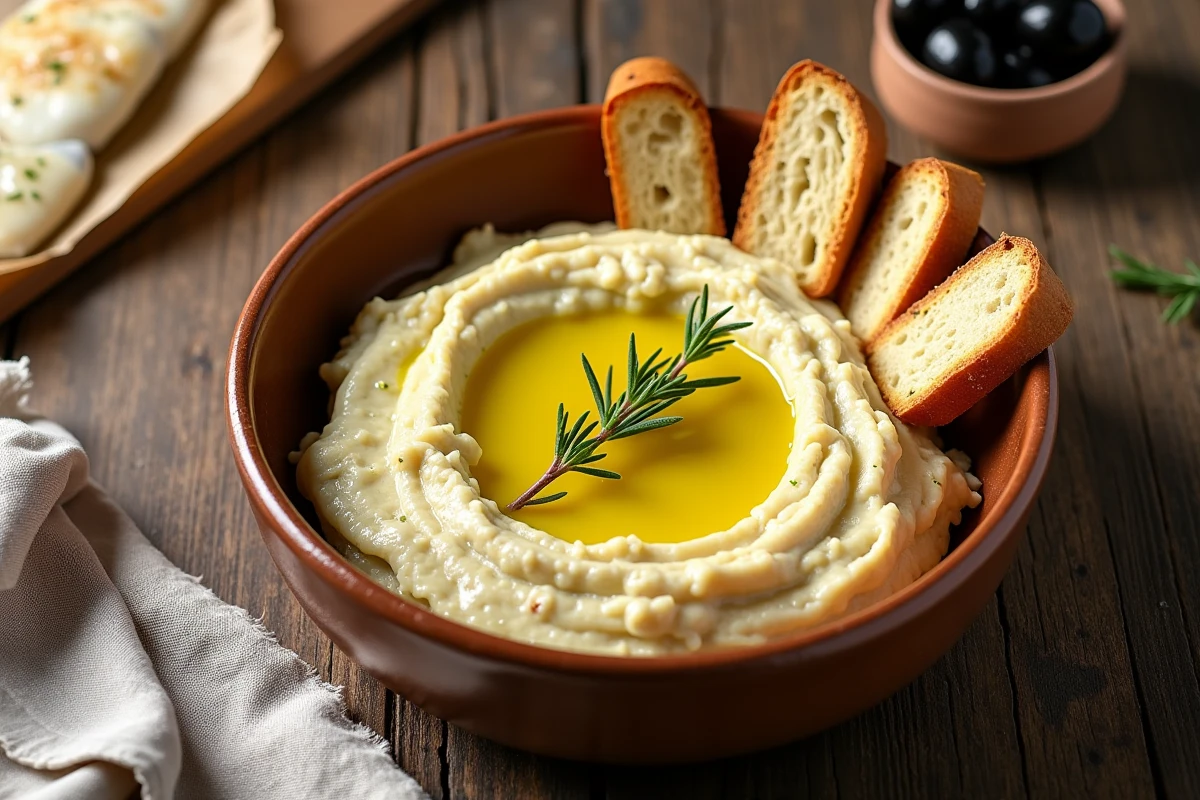
The brandade de morue benefits from being accompanied simply: a green salad, a few garlic-rubbed croutons, or slices of toasted bread. Heavily loaded accompaniments (melted cheese, thick sauces) weigh down a dish already rich in fat and protein. The pleasure comes from the brandade itself, its texture, and the balance between salt, fat, and creamy sweetness.