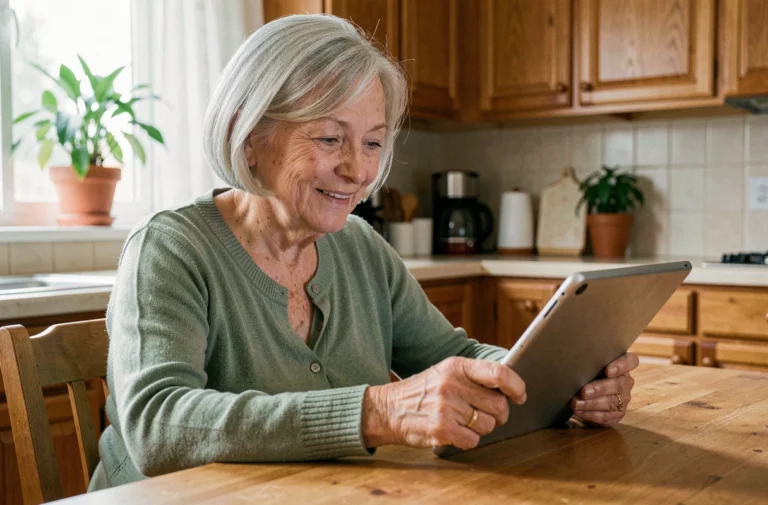
Health and well-being education are undergoing a rapid restructuring. Between the deployment of public digital tools dedicated to mental health, the European framework for artificial intelligence in health, and the multi-year prevention plans launched by several governments, the landscape far exceeds traditional advice on sleep or nutrition. Here’s an overview of the key trends reshaping prevention and support in health.
Artificial intelligence in health: what the European framework concretely changes
The European Commission has set a threefold objective for AI applied to health: to improve patient outcomes, strengthen the financial sustainability of healthcare systems, and enhance the economic competitiveness of the sector. This political positioning goes beyond mere technological experimentation.
In practical terms, this means that diagnostic assistance or remote monitoring devices must meet transparency and security requirements before being marketed in Europe. For healthcare professionals as well as patients, AI in health is becoming a regulatory issue, not just a technological one.
Field feedback varies on this point: some hospitals are already testing decision-support algorithms, while others struggle to integrate these tools into existing workflows. Several interdisciplinary projects, such as those led by French engineering schools in partnership with care centers, explore these bridges between research and clinical practice. Recent articles on Santéducation regularly document these developments at the intersection of health and education.

Mental health prevention: the Jardin mental tool and the National Cause 2026
Mental health has been designated as the National Cause in France for 2026. Beyond symbolic display, this decision comes with concrete measures. The Jardin mental tool, free and accessible online, offers resources to inform, support, and assist individuals facing stress or anxiety.
A public and free digital tool dedicated to mental health marks a shift from previous approaches, which were often limited to occasional information campaigns. The idea here is to provide continuous support without requiring prior medical appointments.
The available data do not yet allow for measuring the actual impact of this type of device on reducing stress or anxiety at the population level. However, the principle of accessible digital prevention for all signifies a change in approach within French public health policies.
Known limitations of digital self-help
An online tool does not replace therapeutic follow-up. Acute distress situations require human intervention. The risk would be to view these platforms as substitutes for care, whereas they function better as a first point of entry or complement.
Quebec prevention plan 2026-2031: a model of structured public health
Quebec has published an action plan related to its national health prevention strategy, covering the period 2026-2031. This plan includes the implementation of 54 measures over five years to improve the health and well-being of the population while supporting the sustainability of the healthcare system.
This type of structured approach contrasts with the fragmented strategies often observed in Europe. Rather than multiplying thematic campaigns (sleep, nutrition, physical activity), Quebec seeks to articulate these aspects within a coherent framework, with monitoring indicators and deadlines.
What this model questions for France
France has national health strategies, but their translation into operational measures often lags behind. The Quebec model poses a direct question: does health prevention benefit from being planned over five years with quantified measures rather than being managed in response to health alerts?
Field feedback varies on this point. Some public health actors believe that a rigid plan lacks adaptability in the face of unforeseen crises. Others argue that a multi-year framework allows for maintaining prevention efforts when media attention shifts away.

Health education: going beyond generic advice
Online health education content often follows the same pattern: eat well, sleep well, move, manage stress. These recommendations are not wrong, but their identical repetition poses an effectiveness problem. Advice heard twenty times does not change behavior.
More recent approaches to health education emphasize three less-exploited levers:
- Adapting advice to the real professional context: standard physical activity recommendations do not apply in the same way to a sedentary worker and a bike courier, whose intense physical effort may actually exacerbate anxiety
- Considering social determinants (housing, income, access to care) in prevention programs, rather than limiting to individual behaviors
- Using natural prevention techniques adapted to the seasons, particularly managing light exposure during winter and adjusting sleep rhythms
This contextual approach requires training health professionals and educators to personalize their recommendations. Universal prevention techniques remain useful, but their impact depends on the ability to make them relevant for each situation.
Balancing innovation and caution in sustainable health
The intersection of health, education, and digital technologies is producing rapid advancements. Initiatives like Jardin mental in France, structured plans like that of Quebec, or the European framework for medical AI are shaping a landscape where prevention becomes a fully-fledged public policy objective.
Many questions remain open. The actual effectiveness of digital self-help tools in mental health has not yet been documented on a large scale. Multi-year prevention plans depend on stable funding and ongoing political will. And the integration of AI into care pathways raises training issues for professionals that are far from resolved.
The underlying trend remains clear: sustainable health relies on education and structured prevention, not just on curative care. The coming years will reveal whether the initiatives launched in 2026 will fulfill their promises or join the long list of initiatives that have gone unfulfilled.