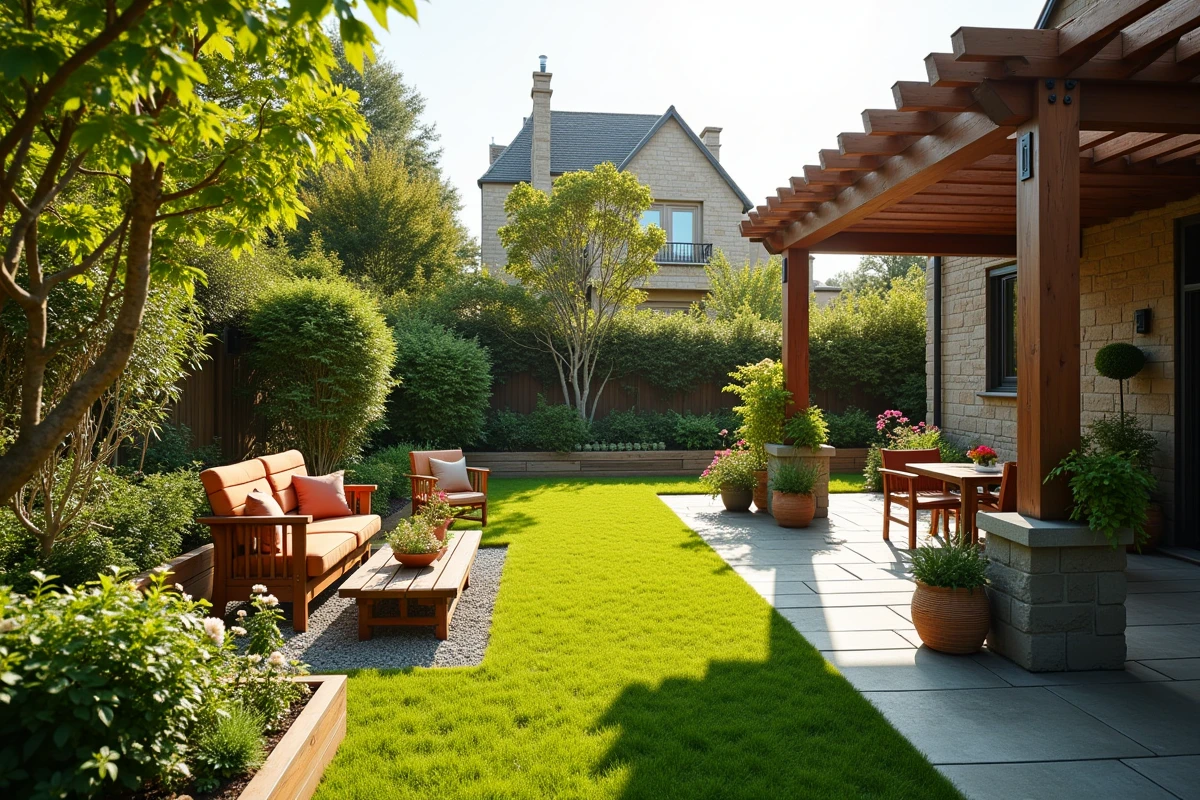
Designing your garden to enjoy it all year round means going beyond purely summer logic. Evergreen plants, closable structures, solar lighting, micro-greenhouses: solutions exist to transform an outdoor space into a living area, even in November. Here are ten concrete ideas, each tailored for a specific use, for a garden that never sleeps.
1. Bioclimatic pergola with adjustable slats
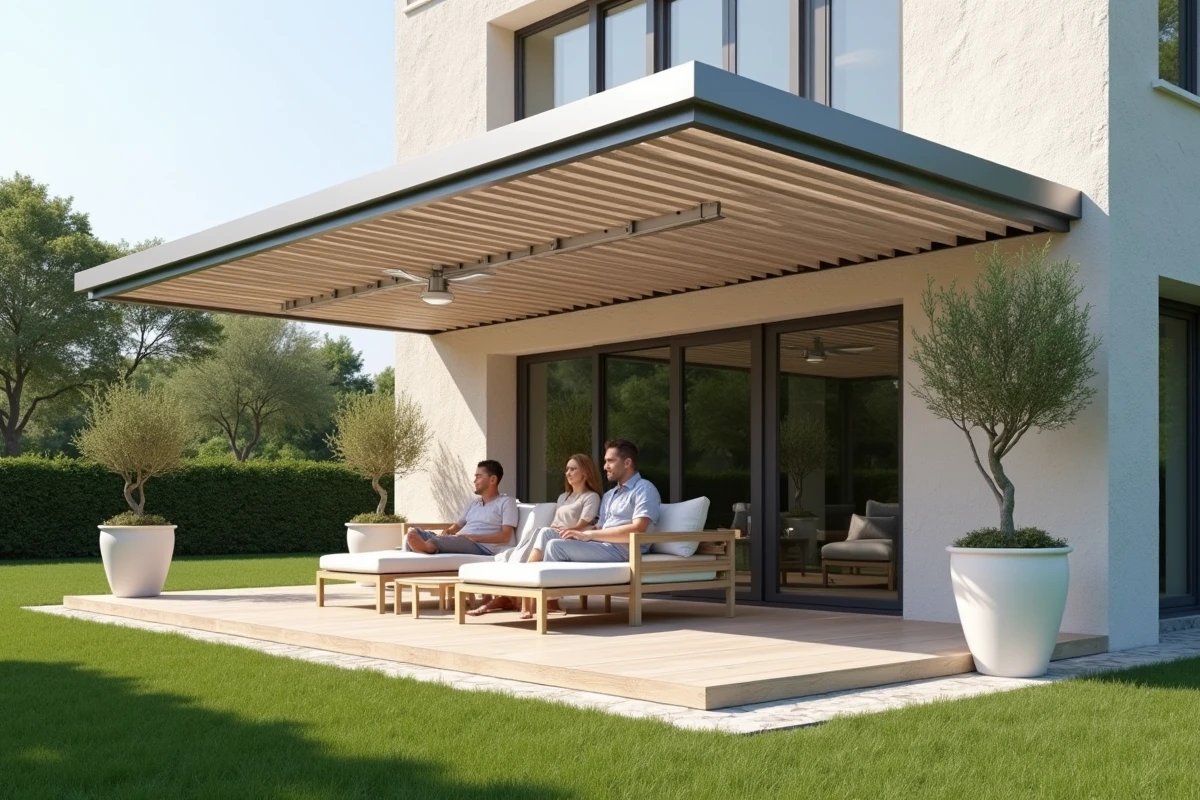
The bioclimatic pergola regulates heat and light thanks to slats that can be tilted according to the weather. In summer, the slats open for ventilation. In winter, closed, they protect from rain and wind.
It extends the use of the terrace for at least three seasons, especially if you add side glass walls or transparent windbreaks. Recent models incorporate sensors that automatically adjust the tilt in case of rain.
You can also see more on tamaisontonjardin.net to explore layout options suitable for every garden configuration.
2. Mixed evergreen hedge to structure the space in winter
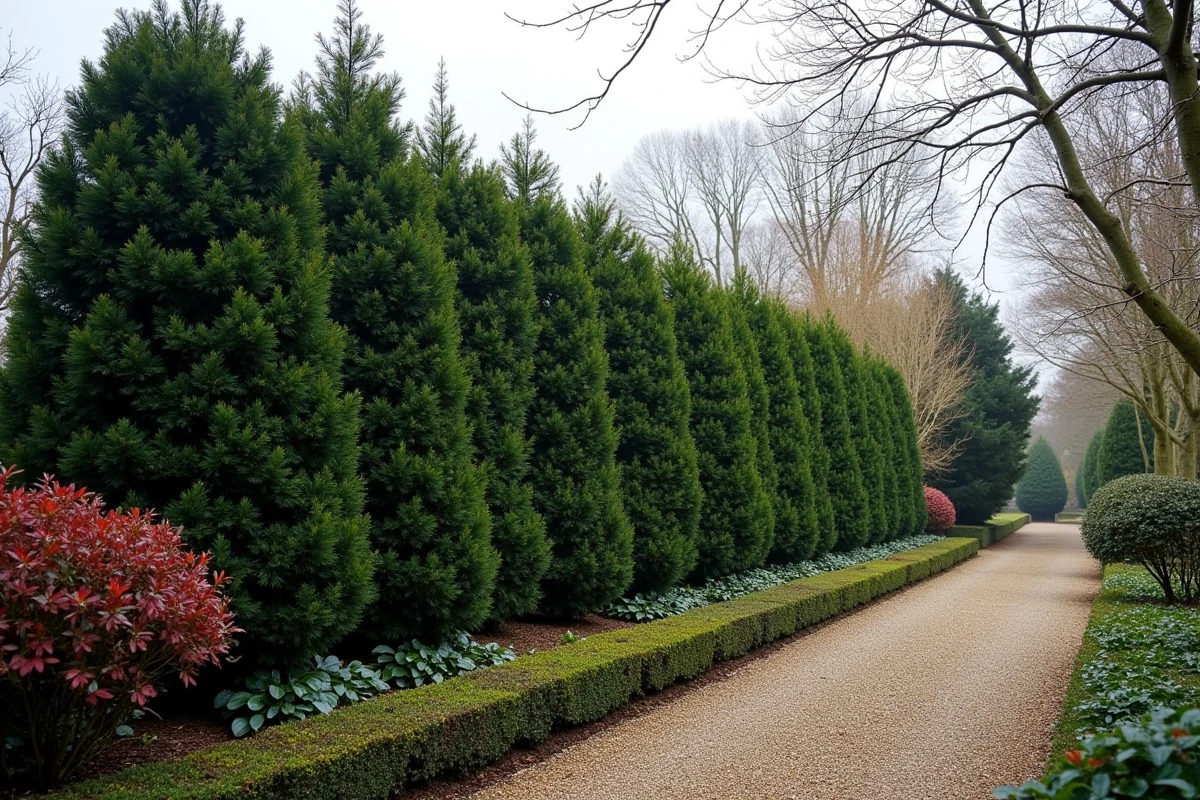
A hedge made solely of thujas remains green but is monotonous. Combining several evergreen species (laurel, photinia, eleagnus) creates volume and color even in the middle of winter.
The laurel flowers as early as December. The photinia produces bright red shoots in spring. This type of mixed hedge also attracts birds, which find berries and shelter in the thickness of the foliage.
3. Solar LED lighting to enjoy the garden in the evening
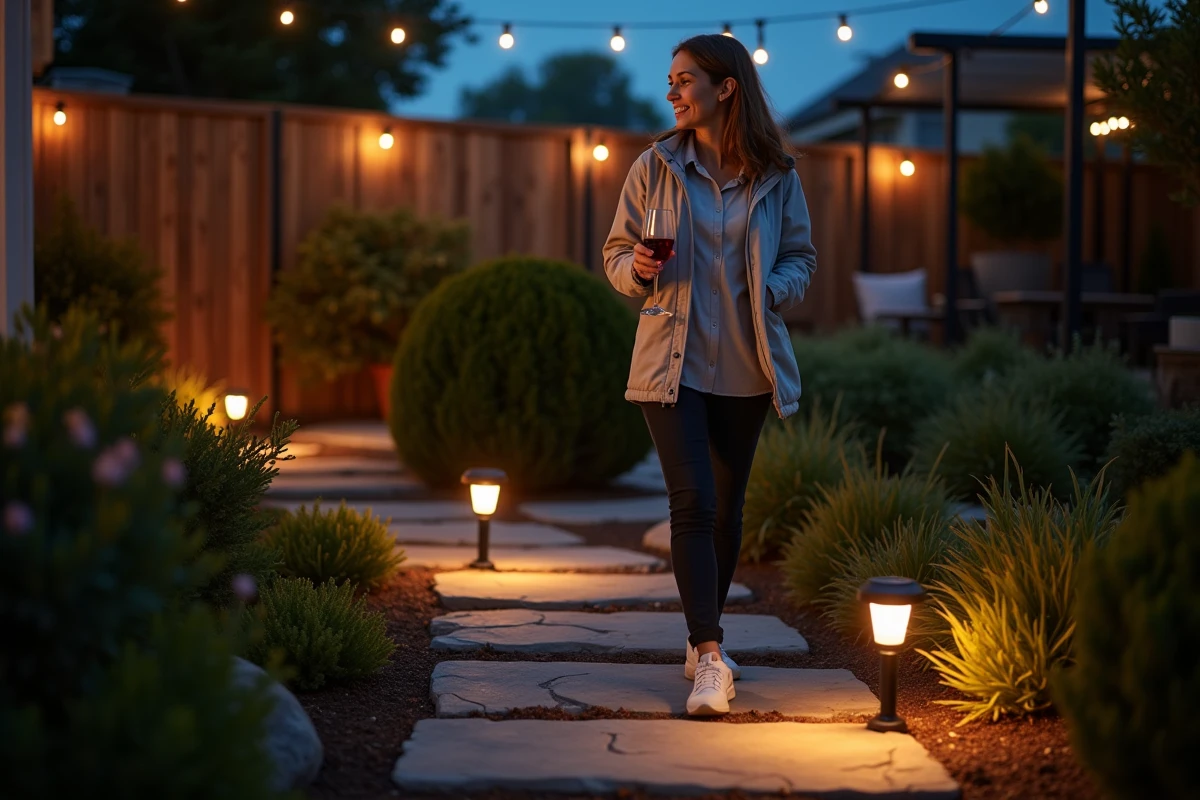
Sales of solar and LED garden lighting have surged in France since 2022, according to a GfK study presented by the Federation of Garden Industries. The reason lies as much in energy savings as in the pleasure of using the garden after sunset, including in autumn.
Solar bollards require no electrical wiring. They are planted along a path or around a terrace. Models with motion detection add a valuable security aspect on winter evenings.
4. Lean-to micro-greenhouse for year-round harvesting
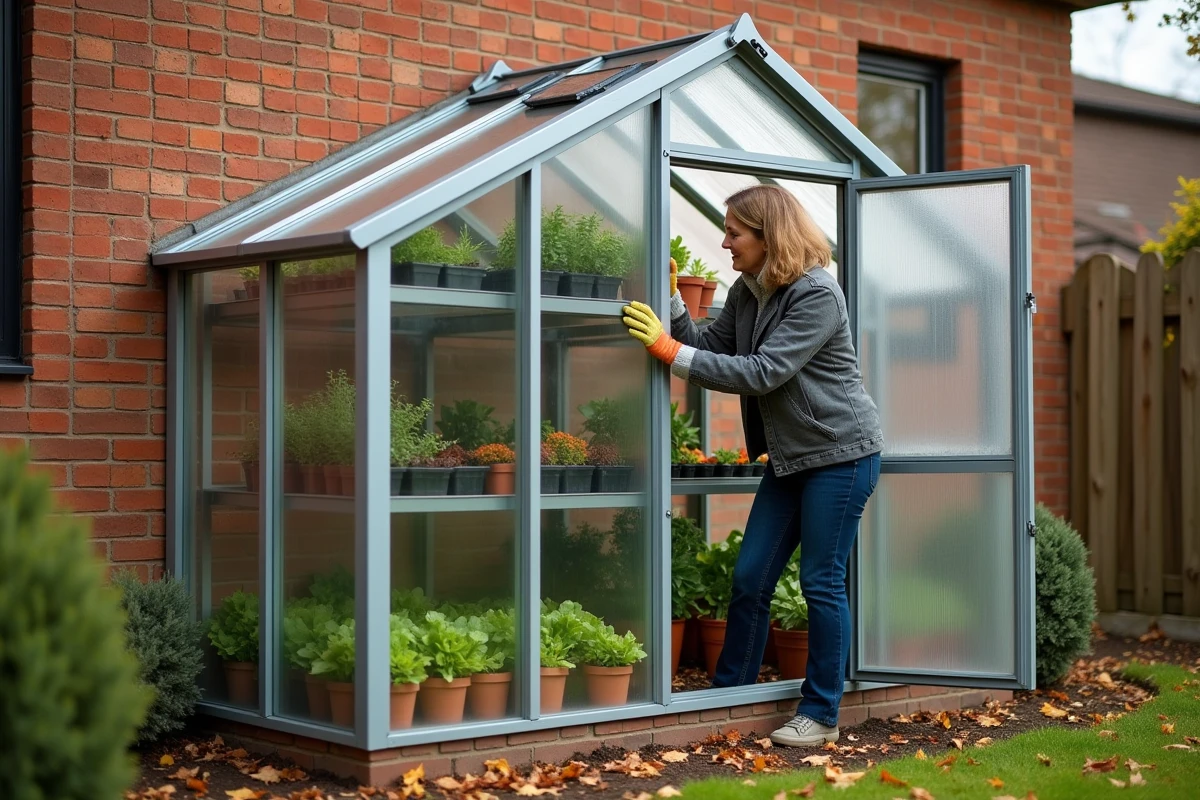
Lean-to micro-greenhouses against the wall of the house capture residual heat from the building. You can grow lamb’s lettuce, spinach, and radishes even in cold weather.
A two-square-meter greenhouse is sufficient for a winter vegetable garden. Fixed against a south-facing wall, it benefits from a thermal effect that keeps a few degrees warmer than in open ground. You can also install a raised vegetable bed to work without bending down.
5. Raised wooden vegetable bed
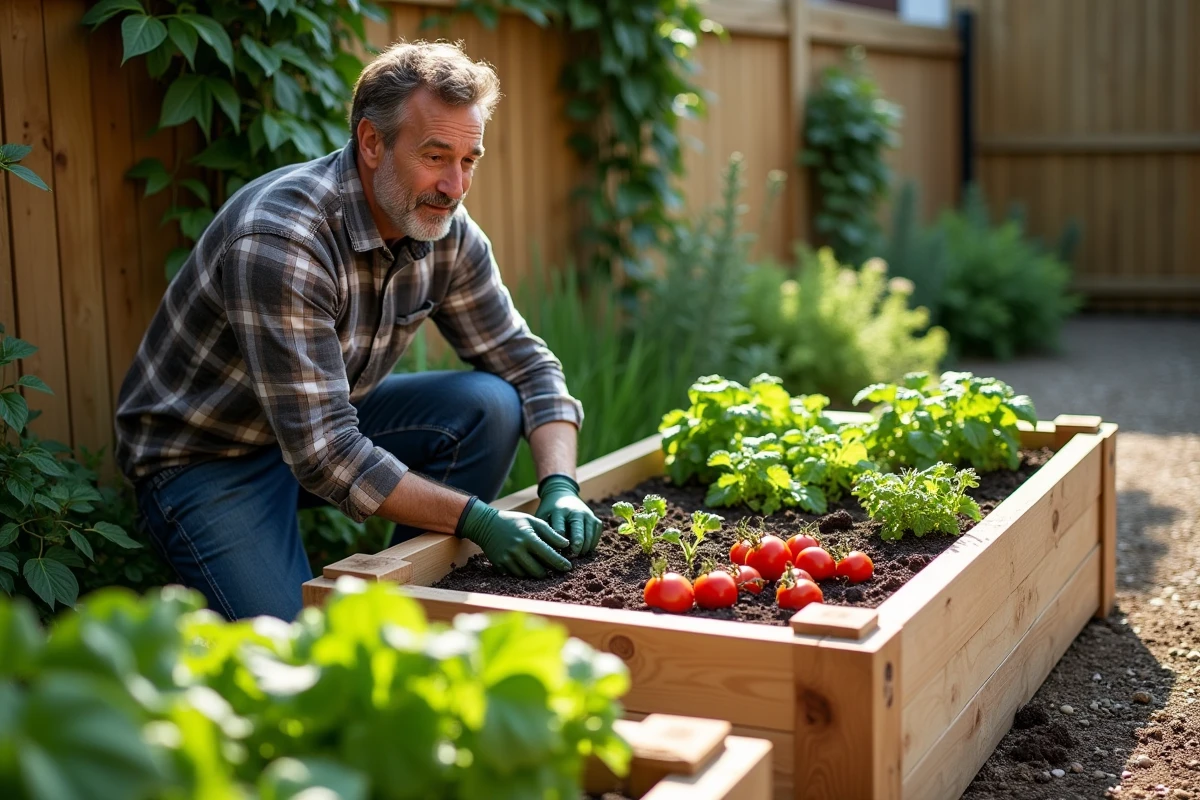
Have you noticed that ground vegetable gardens often end up overrun with unwanted weeds? The raised bed solves this problem: the substrate is isolated from the ground, making it easier to enrich and drain.
A frame made of untreated wood (douglas, larch) 40 to 60 cm high is suitable for most vegetables. Fill it with a soil-compost mix and plant tomatoes, salads, or herbs within easy reach. Maintenance remains minimal, as the limited soil volume reduces weeding.
6. Outdoor fire pit area with brazier
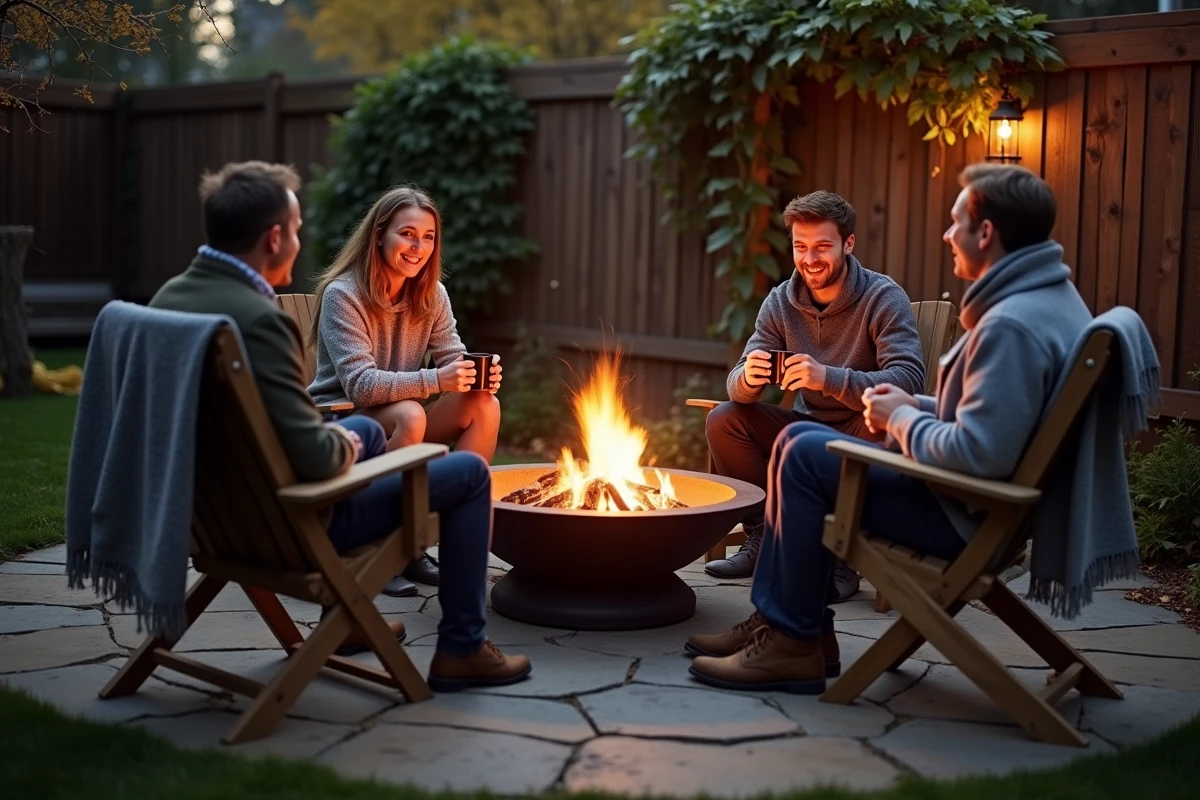
The brazier transforms a corner of the garden into a living space as soon as the chill arrives. Placed on a stable surface (gravel, slabs), it allows you to extend outdoor evenings from October to March.
Models made of corten steel develop a natural rust patina that integrates well into a plant decor. A few rules to follow:
- Place the brazier at least two meters away from any vegetation or combustible fence
- Provide a non-combustible surface under the hearth (gravel, natural stone, concrete slab)
- Check local regulations on outdoor fires before installing the brazier
7. Outdoor green wall with climbing plants
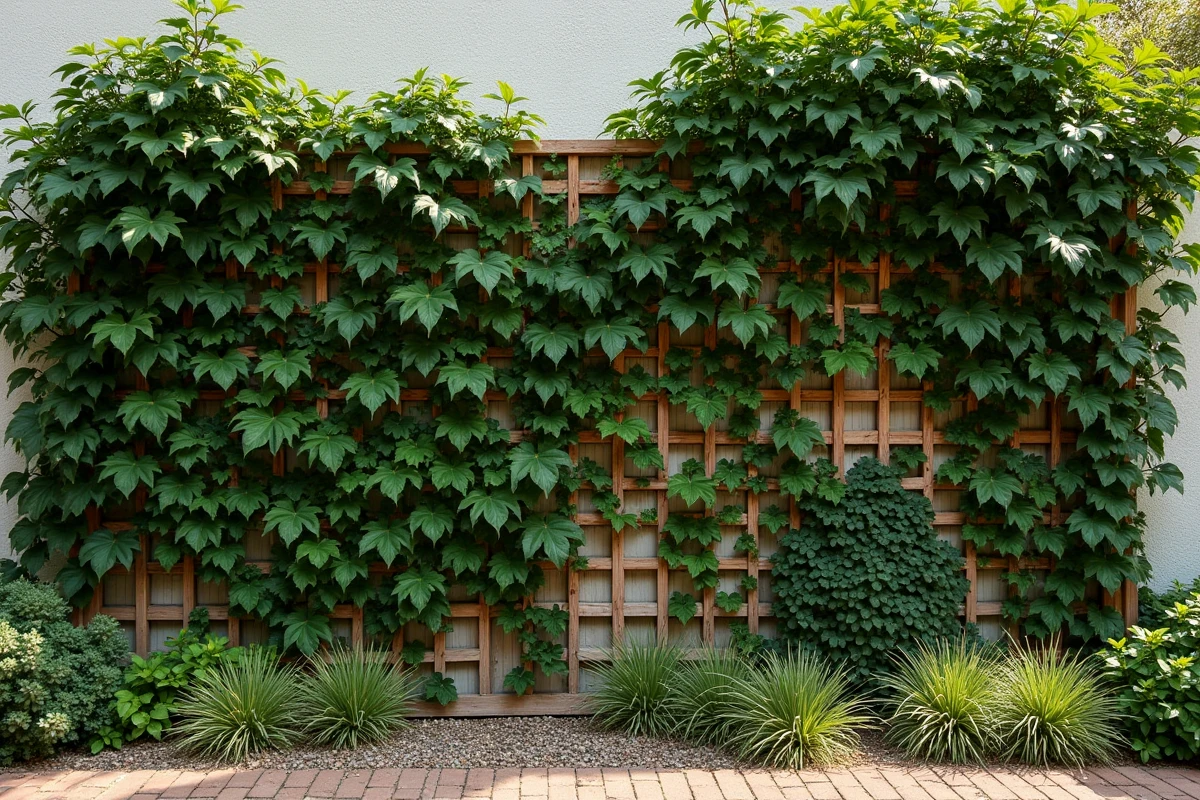
When ground space is lacking, the green wall utilizes height to gain greenery. A simple trellis fixed against a wall is enough to guide ivy, star jasmine, or a persistent clematis.
Star jasmine retains its leaves all year round and scents the air in summer. Ivy, hardy, quickly covers a large area. These climbing plants also insulate the wall from the cold in winter and heat in summer, improving the thermal comfort of the house.
8. Japanese stepping stone path for walking in wet weather
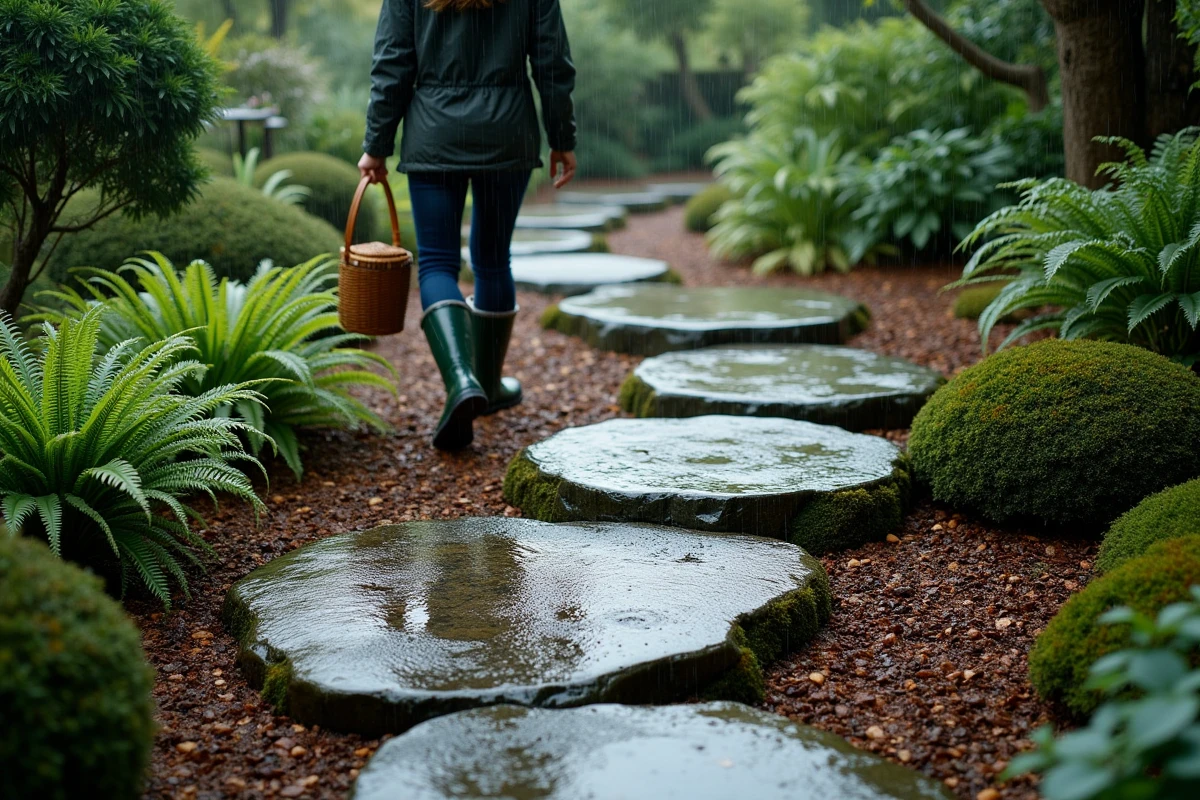
Crossing a waterlogged lawn in November damages the grass and soils shoes. Japanese stepping stones (spaced slabs laid in grass or gravel) create a stable and aesthetic pathway.
Natural stone or ceramic stoneware resists frost without cracking. Space each slab about 60 cm apart, following the natural stride. The result adds style to the garden while making it passable even on rainy days.
9. Synthetic grass for a low-maintenance green space in winter
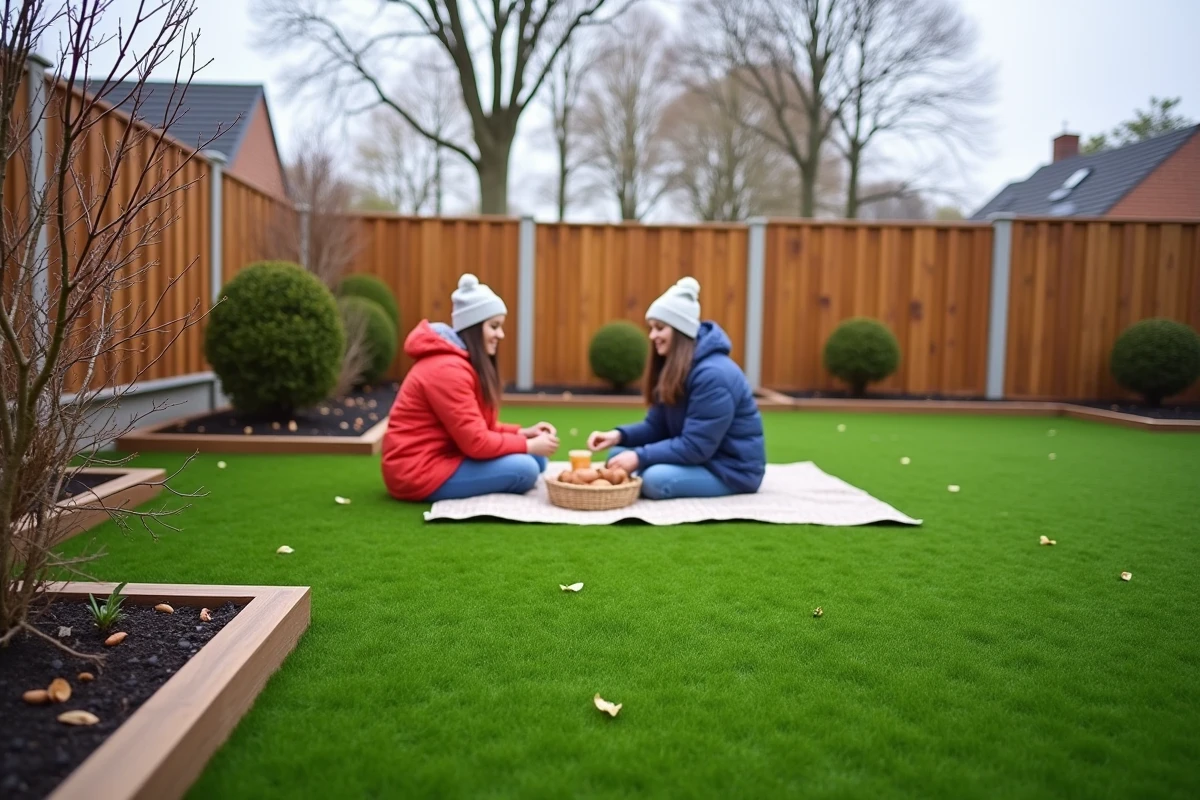
Artificial grass does not yellow in winter and does not form mud. On a small area (relaxation corner, adjoining balcony, play area), it offers a permanent green carpet without mowing or watering.
Why choose this? Synthetic grass is suitable for very shaded areas where natural grass struggles to grow. It is laid on a compacted sand bed with a geotextile underneath to prevent weed resurgence. The downside: it heats up in direct sunlight in summer, making it less pleasant to walk on barefoot during the hottest hours.
10. Mediterranean dry garden with mineral mulch
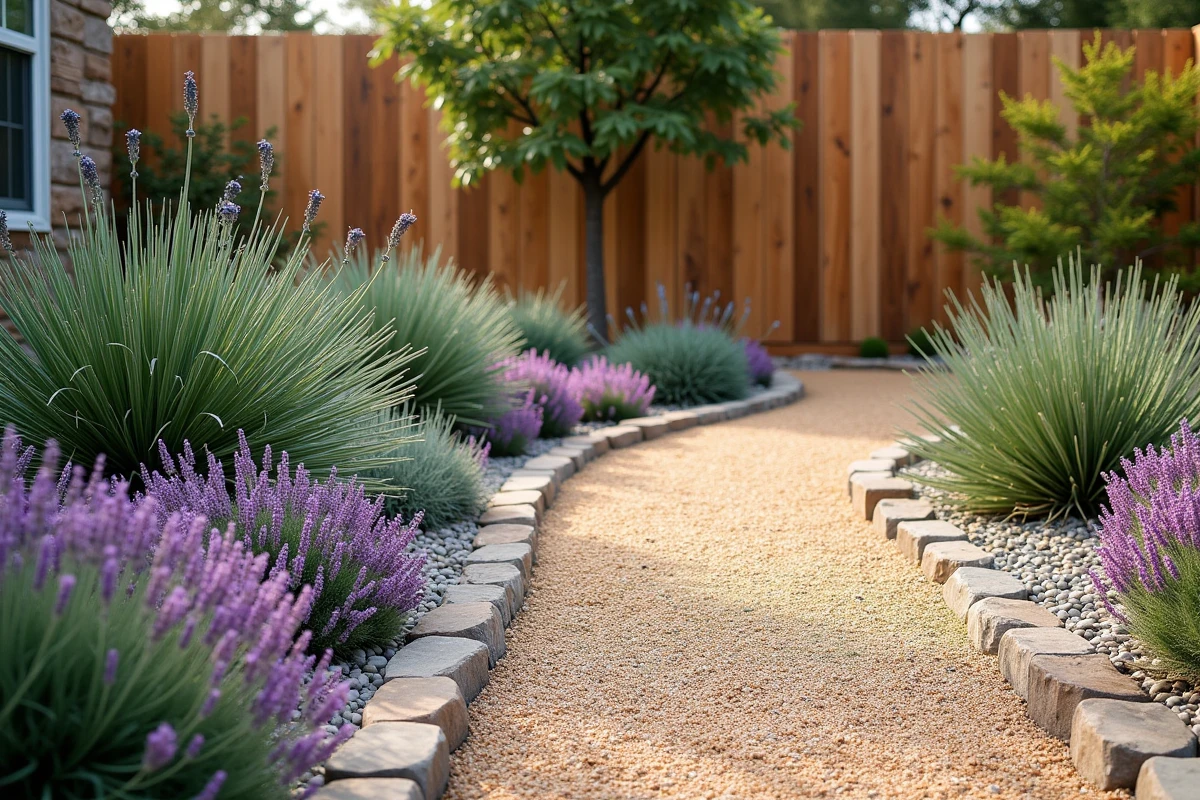
The dry garden combines drought-resistant plants (lavender, ornamental grasses, santolines) with gravel or pumice mulch. This type of landscaping requires very little water and maintains its appearance all year round.
Ornamental grasses remain graphic even in winter, their dry spikes catching the low light. Lavender, trimmed after flowering, retains a compact gray-green shape. The mineral mulch limits evaporation and almost completely eliminates weeding.
Each of these ten ideas addresses a specific constraint: lack of light, waterlogged soil, limited budget, desire to harvest in December. The common thread remains the same: a garden designed for four seasons works better than a garden conceived solely for beautiful days.